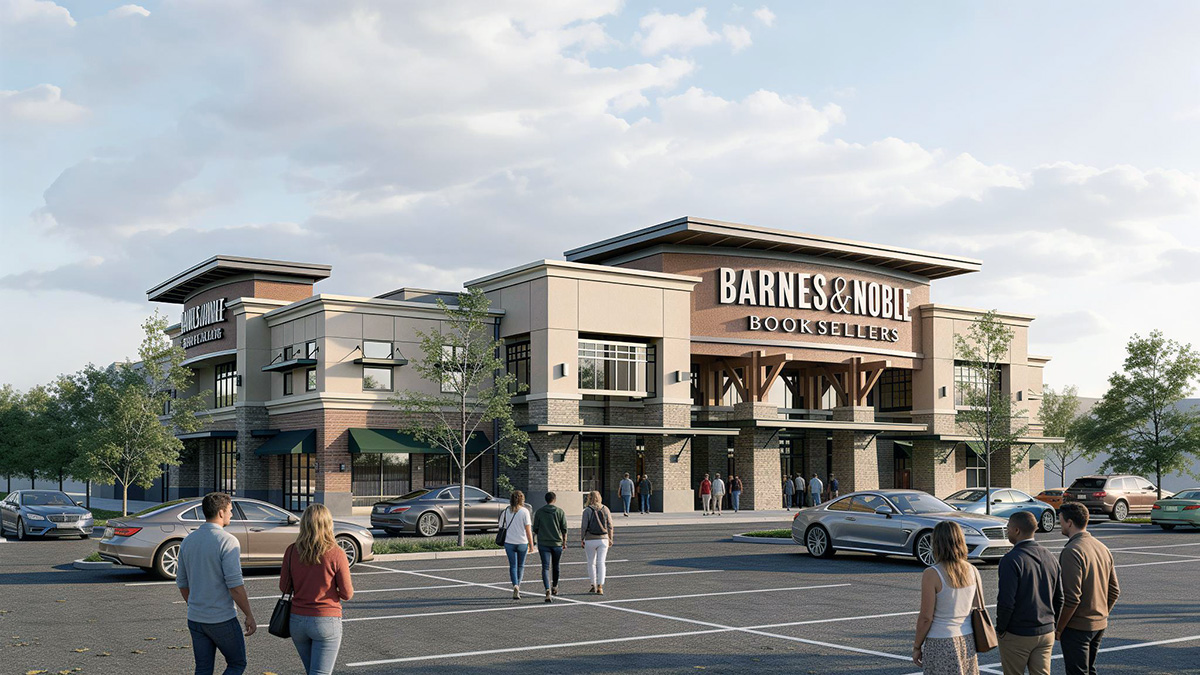
Barnes & Noble Retail Visualization Series
Architectural Rendering Support for Multi-Location Retail Development
Opening Reality — Retail Architecture Must Balance Brand and Context
Retail buildings, especially for well-known brands, are more than functional spaces. They represent identity, consistency, and customer experience. At the same time, each location must respond to its specific site, surrounding development, and local architectural context. Visualization plays a key role in resolving that balance before construction begins.
Project Overview
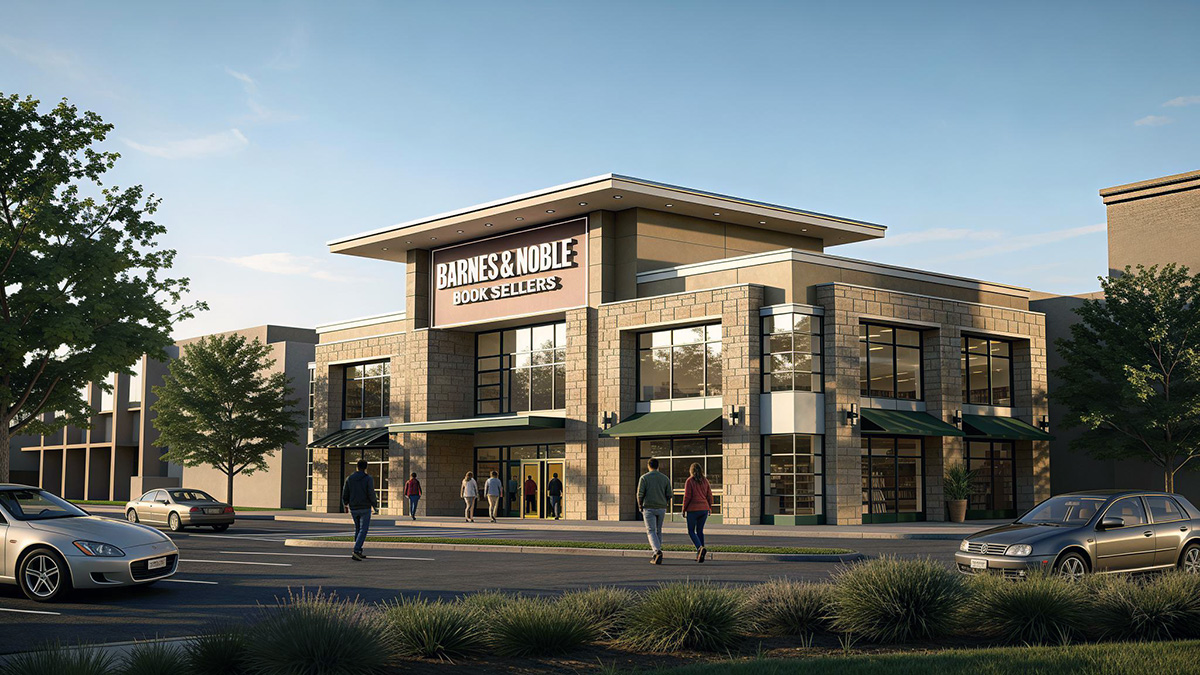
3DAStudio™ provided architectural rendering and visualization services supporting multiple Barnes & Noble retail developments over time. This work was performed in collaboration with architectural firms responsible for the design and documentation of the projects.
Rather than a single standalone engagement, this work represents a series of retail developments across multiple locations, each requiring tailored visualizations while maintaining alignment with established brand expectations.
The projects included:
- Standalone bookstore buildings
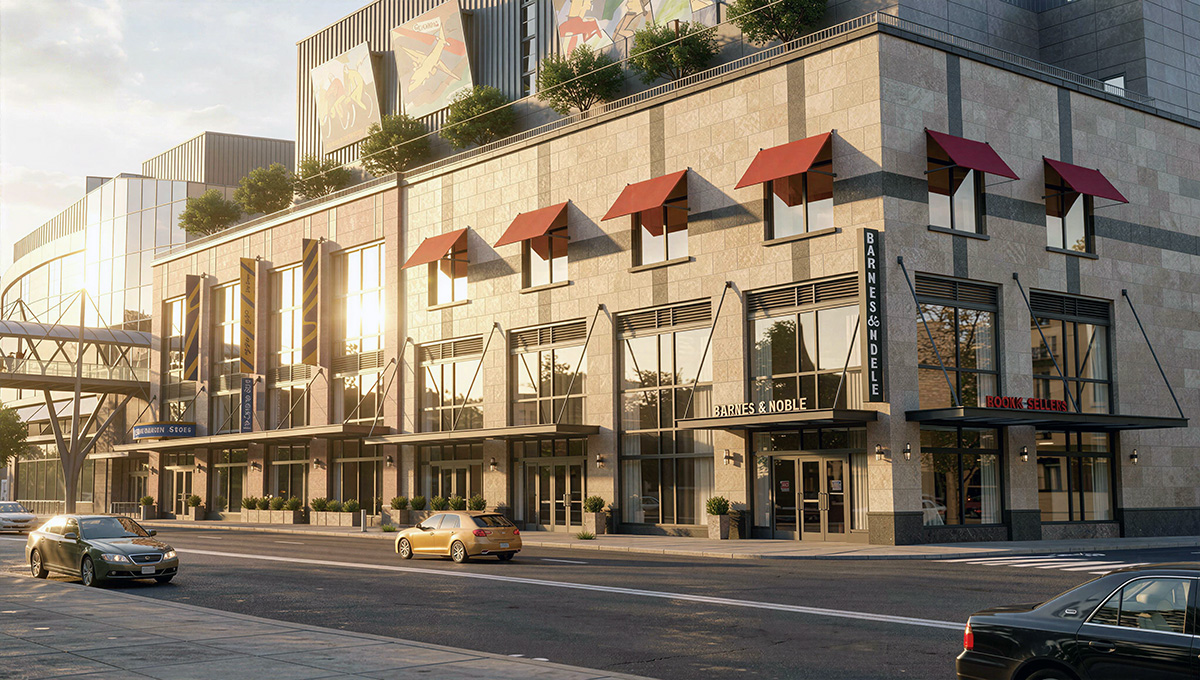
- Retail center and mixed-use integrations
- Urban and suburban site conditions
- Variations in architectural style, materials, and entry conditions
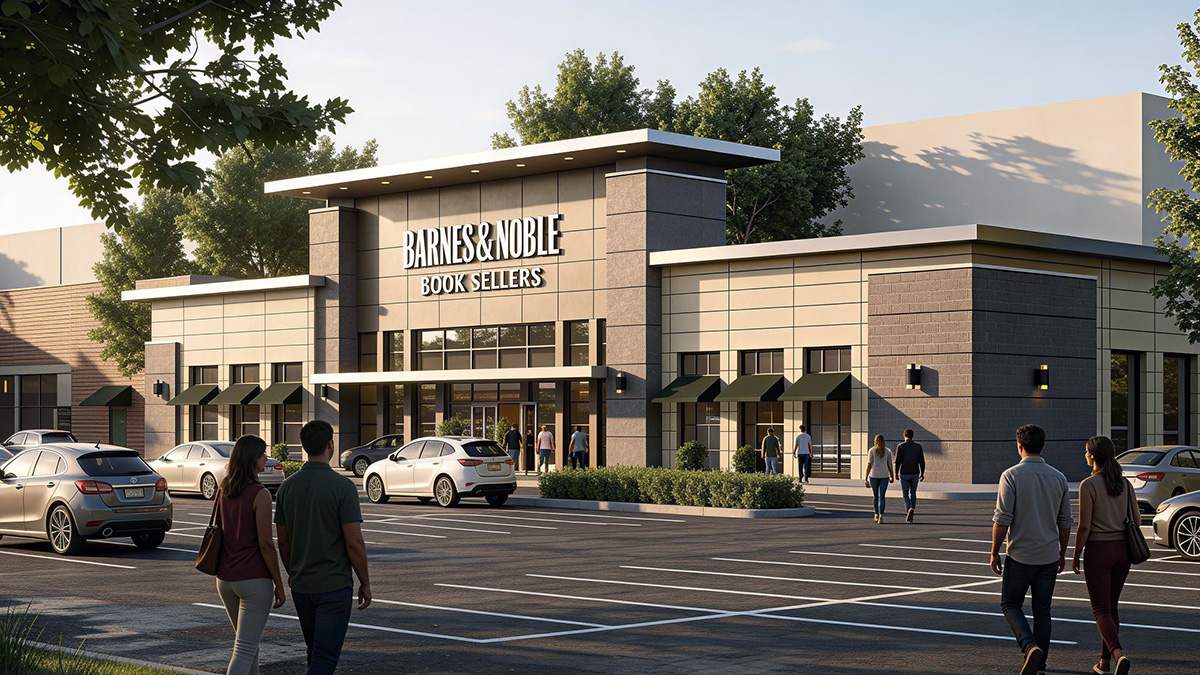
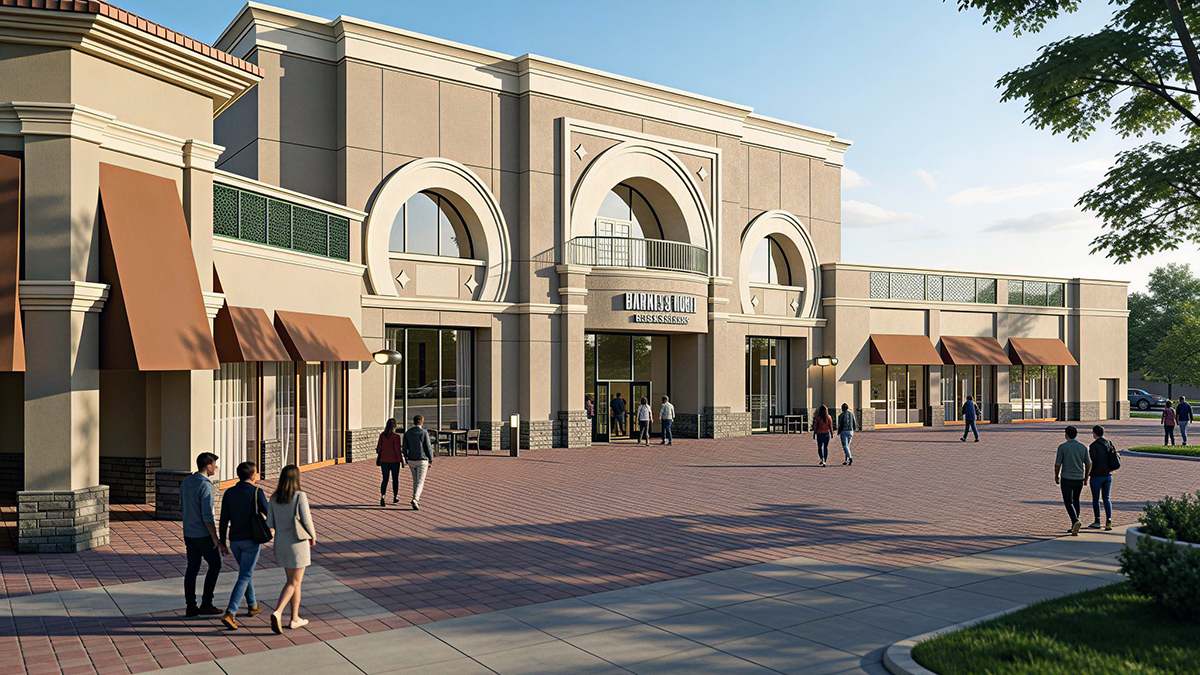
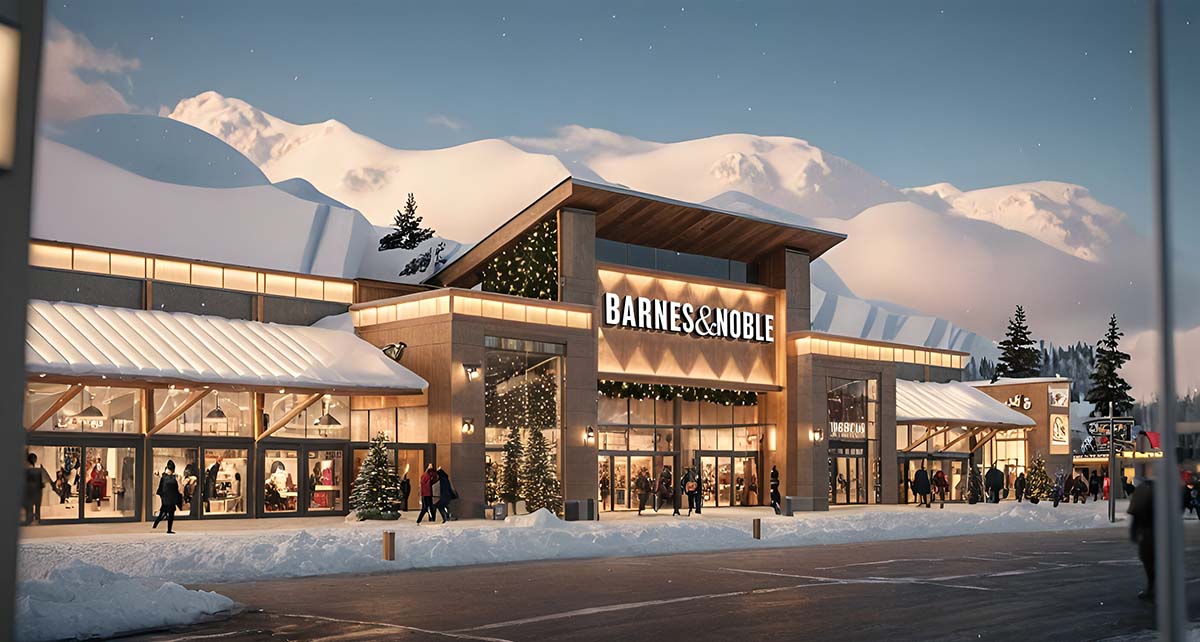
Our role focused on producing exterior architectural renderings used for design communication, stakeholder review, and presentation purposes.
Role and Collaboration — Integrated Within the Design Team
3DAStudio™ worked as part of the extended design team, providing visualization services through architectural firms engaged on the projects.
This included:
- Ongoing coordination with architects and project teams
- Interpretation of design intent into clear visual imagery
- Iterative updates as designs evolved
- Direct communication at times with stakeholders to refine presentation goals
This workflow reflects how visualization is often integrated into real-world project delivery, supporting both design teams and client objectives.
The Real Challenge — Consistency Without Standardization
Each Barnes & Noble location needed to maintain a recognizable identity while adapting to different site and development conditions.
The challenge was to:
- Reflect the brand’s architectural presence without creating repetition
- Adapt building forms to different site constraints
- Maintain consistency in quality and presentation across projects
- Communicate design intent clearly to both internal and external stakeholders
This required a balance between standardization and customization.
Visualization Strategy — Clear, Real-World Representation
The renderings were developed to communicate how each store would be experienced in its actual environment.
This included:
- Strong emphasis on entry conditions and storefront visibility
- Accurate representation of materials and façade articulation
- Realistic lighting and environmental context
- Use of people and vehicles to convey scale and activity
The goal was to present each project as it would realistically appear once built.
Architectural Expression — Flexible Within a Recognizable Framework
Across multiple projects, the architectural language evolved based on site and design direction.
The renderings reflect:
- A range of façade treatments, from traditional masonry to more contemporary expressions
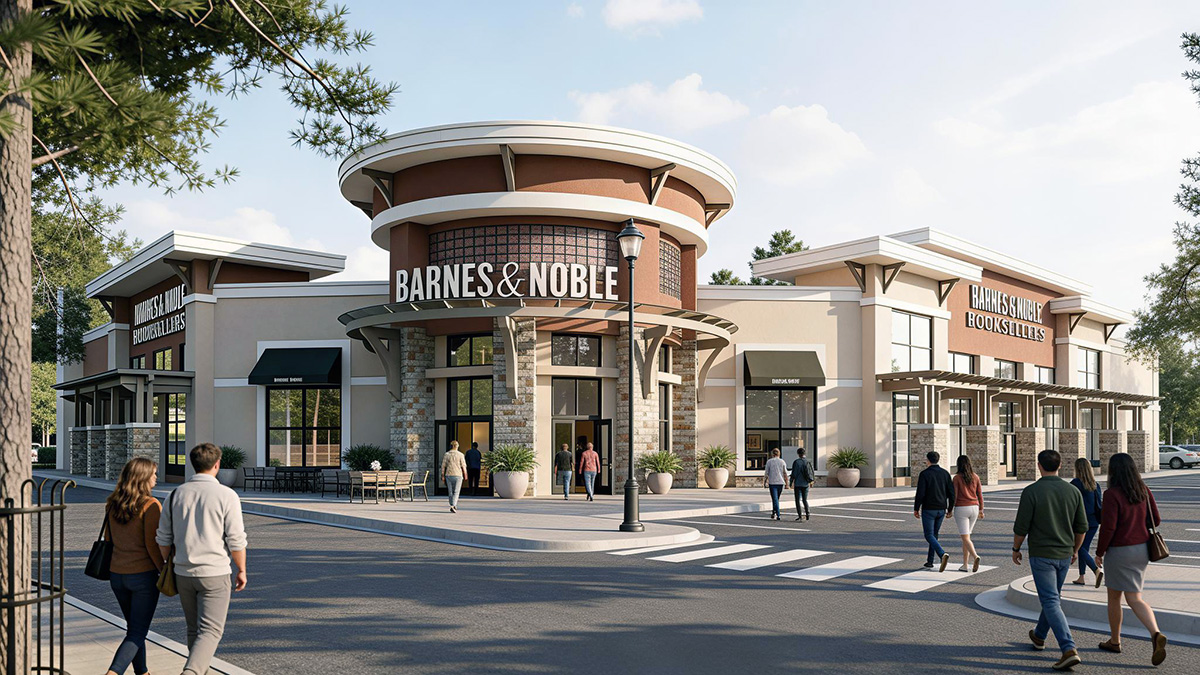
- Variations in rooflines, canopies, and entry features
- Integration with surrounding retail or mixed-use developments
- Site-specific adjustments that respond to context and scale
This demonstrates how a retail brand can maintain identity while adapting to different environments.
Multiple Projects — Maintaining Quality Across Volume
Working across multiple retail developments requires consistency in both process and output.
This included:
- Maintaining a unified visual standard across all renderings
- Efficient workflows to accommodate multiple project timelines
- Attention to detail regardless of project scale
- The ability to quickly adapt to evolving design input
Each project was approached individually while benefiting from experience across the broader series.
Customer Experience — Visualizing the Approach and Arrival
Retail visualization is centered on how customers experience a building.
The renderings emphasize:
- Approach from parking areas and pedestrian paths
- Visibility and clarity of storefront entry
- Human scale and activity
- The relationship between the building and its site
These elements help stakeholders evaluate not just the building, but the experience it creates.
Operational Clarity — What These Projects Deliver
Across the series, the visualization consistently communicates:
- Clear and recognizable retail storefront identity
- Functional and accessible building design
- Adaptability to different site and development conditions
- A cohesive presentation of brand and architecture
This clarity supports both design decisions and stakeholder alignment.
What This Allowed the Project Teams to Do
The renderings supported a range of project needs across multiple developments:
- Design review and refinement
- Communication with stakeholders and development partners
- Evaluation of site-specific design solutions
- Presentation of projects during planning and development phases
Visualization served as a bridge between design intent and real-world understanding.
Positioning — Supporting Retail Development Through Visualization
This body of work demonstrates experience supporting retail development through architectural visualization.
It reflects the ability to:
- Work within established brand frameworks
- Collaborate with architectural teams across multiple projects
- Deliver consistent, high-quality visualizations
- Adapt to varying project requirements and site conditions
This type of work requires both technical understanding and sensitivity to brand-driven design.
Where This Fits Today
Retail environments continue to evolve, with increasing emphasis on experience, identity, and integration into broader developments. Visualization remains a key tool in aligning design, branding, and site conditions before construction.
What These Projects Show
This case demonstrates that architectural visualization plays an essential role in retail development, particularly when multiple locations and evolving design conditions are involved.
It shows that:
- Visualization supports consistency across multiple projects
- Brand identity can be communicated through architecture
- Collaboration between design teams and visualization teams is critical
- Clear, accurate imagery improves decision-making
Most importantly, it reinforces that effective visualization is not just about producing images.
It is about supporting the development process across multiple projects and teams.
CAHDD Transparency — How These Images Were Created
Most of our work is CAHDD Stage 0 or Stage 1. That means it is either fully human-created or built using standard digital tools with complete human control. That is still the foundation of how we work.
For some of the images in this case study, we pushed into CAHDD Stage 3. These were run through an AI-based enhancement process to improve resolution, color, and lighting. The design, modeling, composition, and intent are all ours, but the AI is participating in the refinement. Because of that, we are calling it what it is.
This is not a replacement for how we work. It is a controlled use of a tool. We are testing it, understanding it, and being upfront about it.
CAHDD (Computer Aided Human Designed & Developed) is a framework we created to make this kind of transparency simple and visible. It is not about enforcement or gatekeeping. It is about showing where the human hand is and where the machine starts to get involved.
CAHDD Stages as they apply to architectural visualization:
Stage 0 — Fully hand-created work with no digital tools.
Stage 1 — Standard digital workflow. Modeling, rendering, and post-production with full human control.
Stage 2 — Procedural or automated processes that assist, but do not influence creative decisions.
Stage 3 — Human-directed work with AI assisting in refinement such as lighting, resolution, or visual polish.
Stage 4 — AI-generated content with human direction and selection.
Stage 5 — Fully AI-generated work with minimal human input.
Stage X — Mixed or evolving workflows that combine multiple stages.
Full framework and philosophy: CAHDD.org