CWU Athletics Photomontage
Photomontage Visualization for Stadium Renovation and Athletic Complex Expansion
Opening Reality — When Reality and Visualization Must Become One
Most architectural renderings exist in a controlled environment. Lighting is perfect, context is simplified, and the image is built from the ground up. Photomontage work removes that safety net. When a rendering is placed directly into real-world photography, especially drone imagery, every inconsistency becomes visible. The human eye is far less forgiving when real and digital elements sit side by side. That is where this type of visualization becomes both technically demanding and highly valuable.
Project Overview
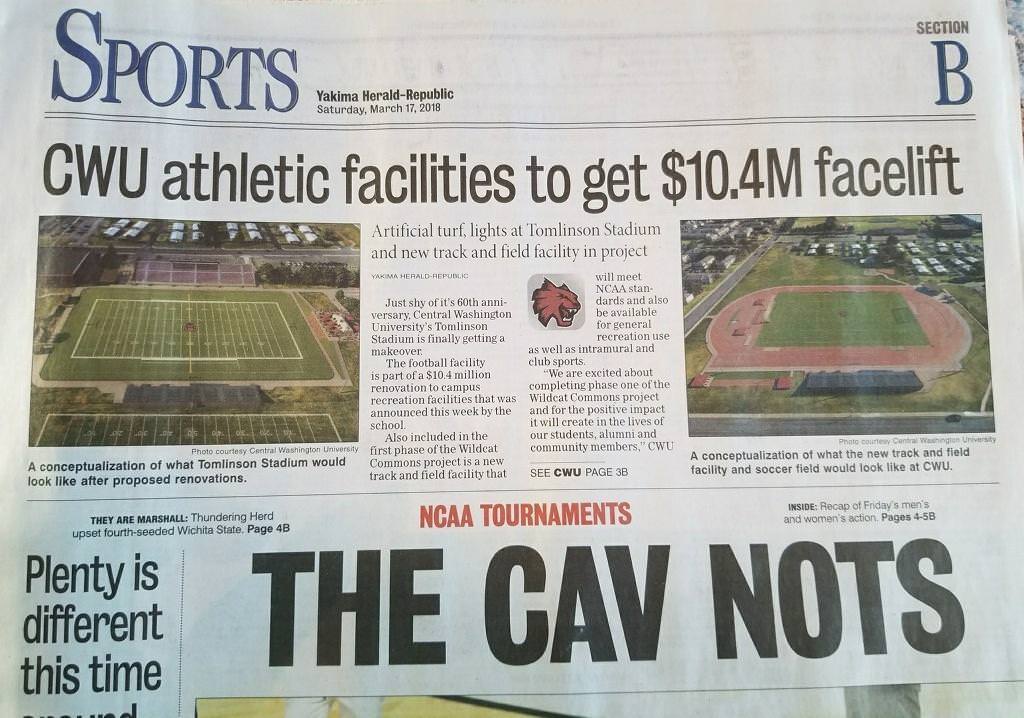
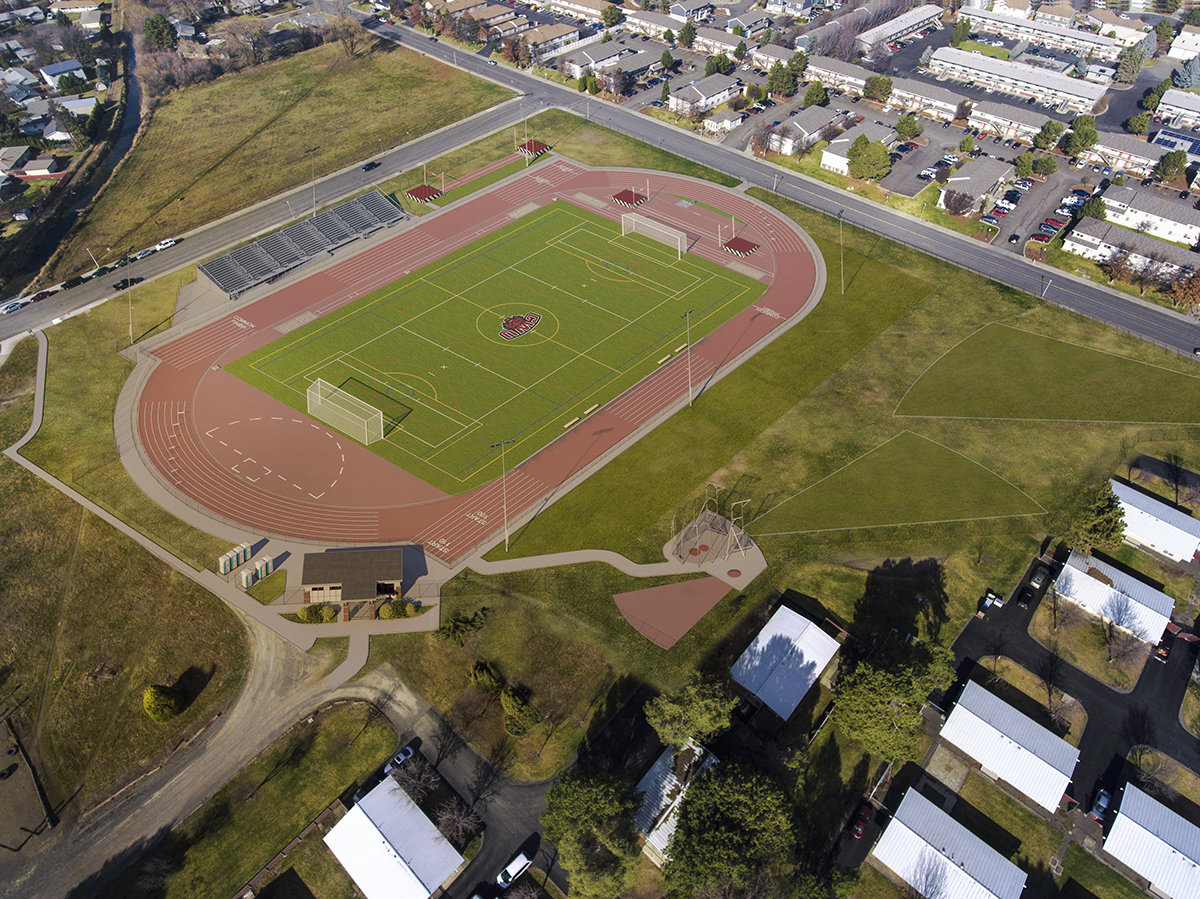
This project involved visualization services for Central Washington University’s athletics department, depicting both the renovation of the football stadium and the development of a new track and field facility. The work required integrating photorealistic 3D renderings directly into high-resolution drone photography of the existing site.
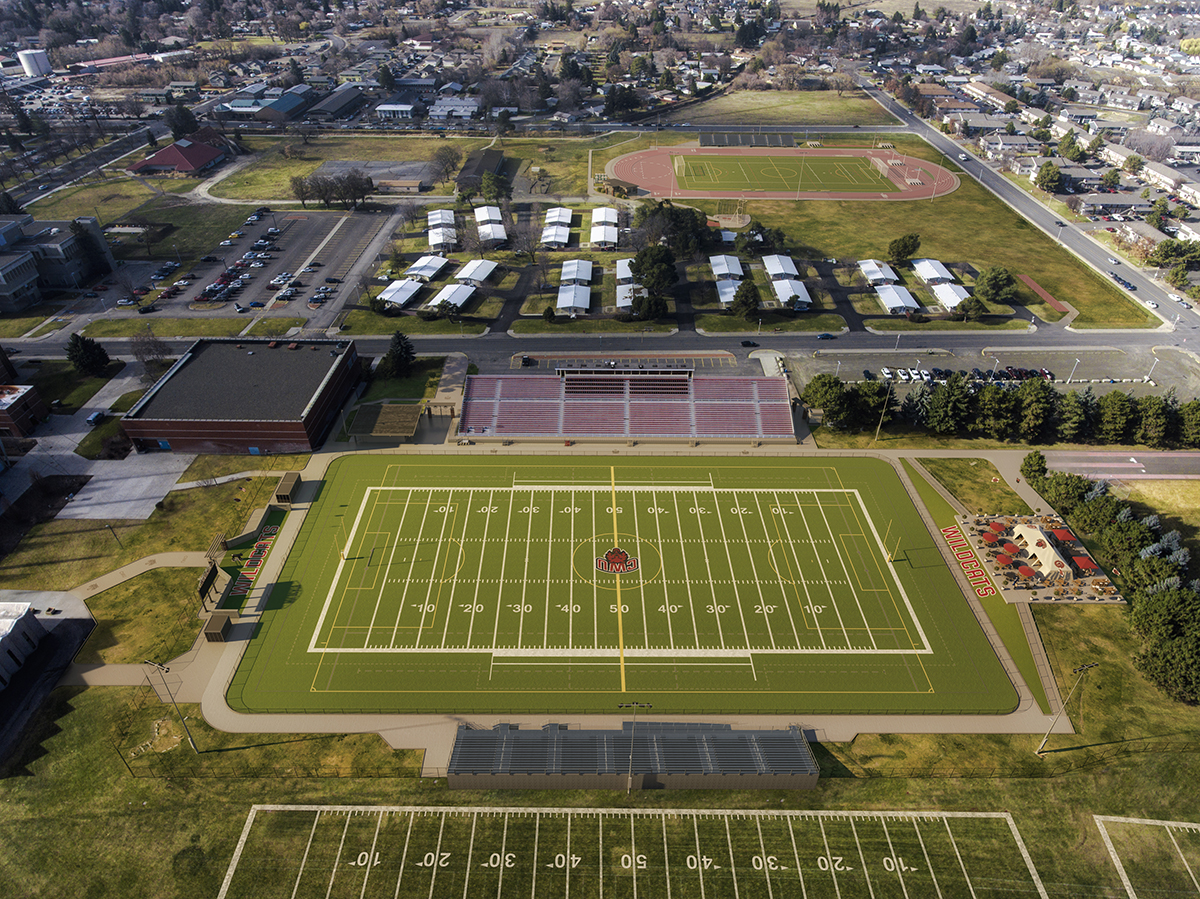
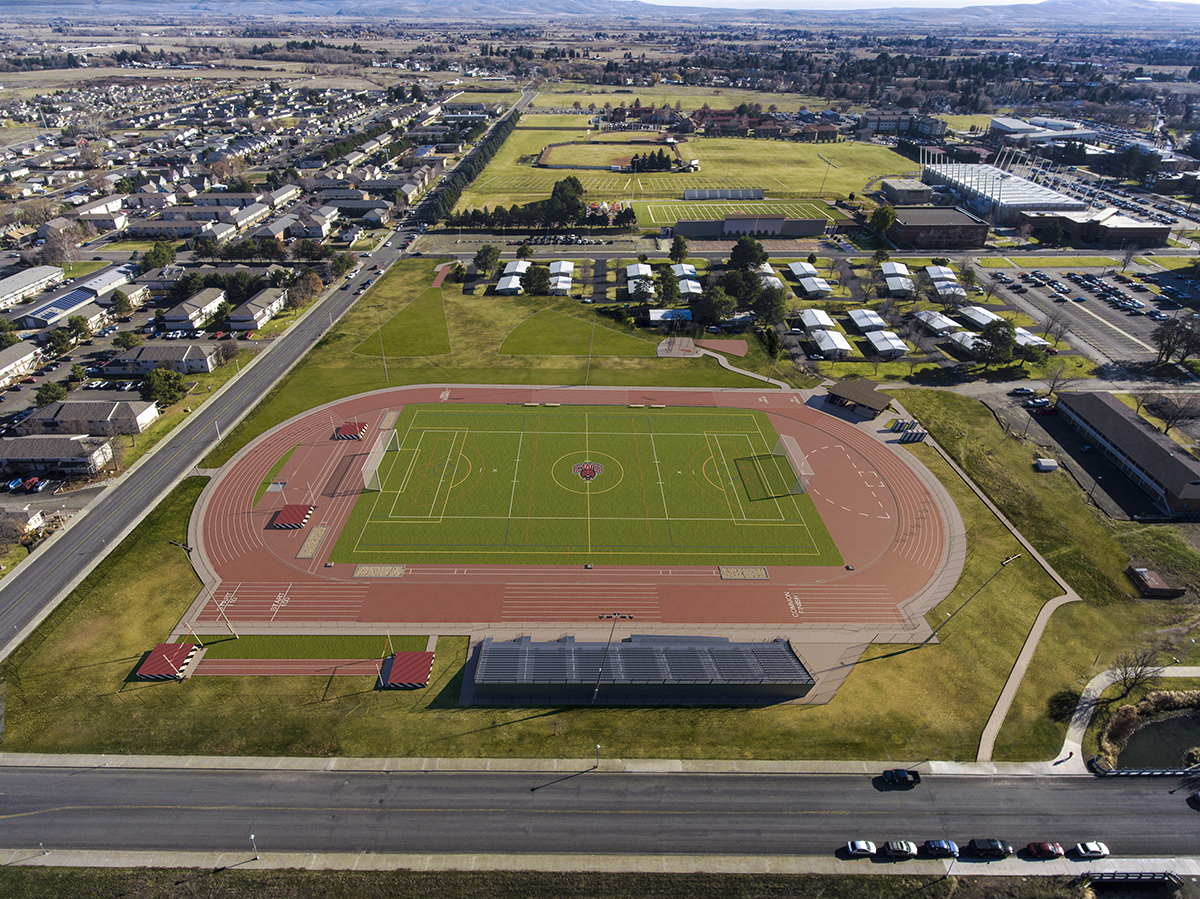
The stadium renovation included upgrades such as artificial turf installation, LED stadium lighting, new plazas at both end zones, improved entry sequences, and supporting facilities. The new track and field complex included a full NCAA-compliant 400-meter track, throwing areas, grandstands, lighting systems, and support infrastructure designed to accommodate both competitive events and student recreation.
The goal was to present these improvements as if they already existed within the current campus environment.
The Real Challenge — Matching Reality Exactly
Photomontage projects are fundamentally different from traditional rendering work. Instead of building an entire scene, the task is to match an existing one. The drone photography provides real-world lighting, atmospheric conditions, perspective, and imperfections. The rendering must align with all of those variables precisely.
This required solving for:
- Exact camera matching from drone imagery
- Real-world lighting direction and intensity
- Atmospheric conditions such as haze and color balance
- Scale and proportion relative to existing buildings and terrain
- Material response that behaves consistently with the photographed environment
Even small discrepancies in shadow direction, brightness, or perspective would immediately break the illusion.
Visualization Strategy — Seamless Integration, Not Overlay
The approach focused on making the rendered elements feel native to the photograph rather than layered on top of it. This meant:
- Matching lens distortion and camera height
- Aligning sun position and shadow length precisely
- Adjusting color grading to match the original drone image
- Introducing subtle imperfections where needed to avoid an overly “perfect” look
The goal was not to make the rendering stand out. It was to make it disappear into the photograph.
Stadium Renovation — Enhancing an Existing Landmark
The football stadium visualization required careful integration into an existing and recognizable campus environment. Elements such as new turf, lighting, and plaza spaces had to feel like natural upgrades rather than additions.
The renderings communicate:
- Improved game-day experience
- Enhanced spectator areas and circulation
- Stronger visual identity for the stadium
- A more modern and functional athletic facility
Because the base image is real, the improvements read as tangible and immediate.
Track and Field Complex — Building What Doesn’t Yet Exist
The track and field facility presented a different challenge. While portions of the site existed, much of the new complex had to be introduced into the landscape.
The visualization needed to clearly communicate:
- The full extent of the facility
- NCAA-compliant track and field layout
- Spectator seating and circulation
- Multi-use functionality for both athletics and student recreation
By embedding this into a real aerial image, the scale and placement become immediately understandable without requiring explanation.
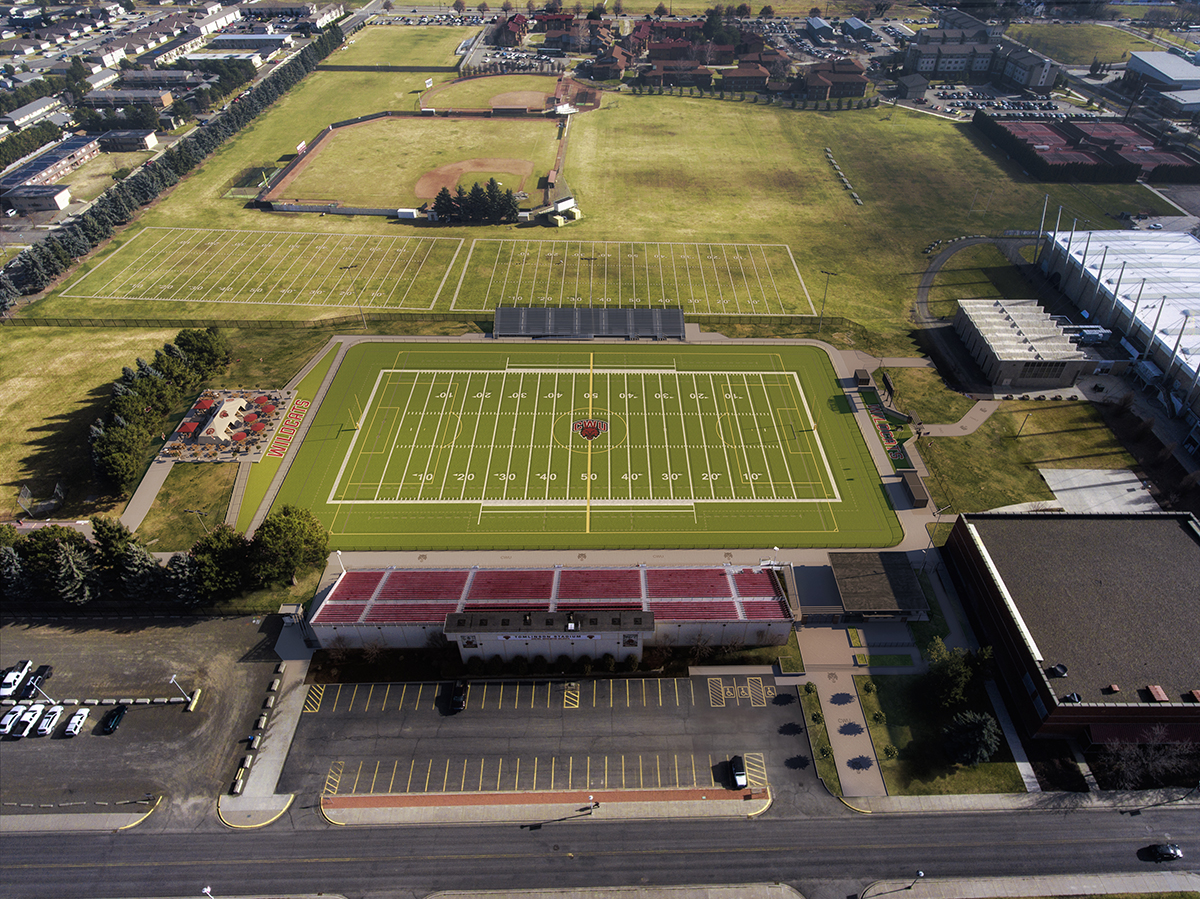
Tomlinson Stadium Renovation Project Features:
Installation of artificial turf
Regulation-size field for football, rugby, & soccer
Installation of LED stadium lighting
Construction of Wildcat Plaza (South End Zone)
Construction of Alumni Plaza (North End Zone)
Restrooms Renovation
New Entry Gates
New Box Office/Ticketing
Recreational Sports Complex Project Features:
Approximately 370,000 square feet
Artificial turf infield
Fully lit, 4 pole system
Grandstands with 600 spectator seats
400-meter all-weather track that meets all NCAA competition specifications to accommodate all running events and multi-directional runways for jump events, i.e., high jump, pole vault, long jump, and triple jump
Throws venue that meets all NCAA competition specifications to accommodate hammer, shot put, javelin, and discus
Stadium style scoreboard
Restrooms with storage facility for equipment
Food truck capabilities
Additional 1,000 + hours to program outdoor activities
Safe, protected space for students to recreate at night
Perimeter fencing
Electricity, and internet and/or wireless capabilities
Why Photomontage Was Critical for This Project
In projects where context matters, photomontage provides a level of clarity that traditional rendering cannot. Instead of asking viewers to imagine how a project fits into its surroundings, it shows them directly.
This is especially important for:
- Campus environments with existing identity
- Projects where scale and placement are critical
- Stakeholders who are familiar with the site
- Decision-makers who need immediate clarity
In this case, the visualization allowed the university to present future improvements within a recognizable and trusted context.
What This Allowed the Client to Do
The photomontage renderings provided a powerful communication tool that helped stakeholders understand the project instantly. It allowed the university to present both renovation and expansion in a way that felt real and achievable.
This supported:
- Clear communication of project scope
- Alignment between stakeholders and decision-makers
- Stronger presentations for funding and approvals
- A realistic preview of how the campus would evolve
By removing ambiguity, the visualization increased confidence in the project.
Where This Fits Today
Photomontage continues to be one of the most effective visualization techniques for projects where context is critical. With the increasing use of drone photography, this approach has become more common, but it remains technically challenging.
Many projects now rely on this method when:
- Full site modeling is impractical
- Real-world context must be preserved
- Timelines require efficient visualization
- Stakeholders need immediate visual clarity
It represents a hybrid approach between photography and rendering that combines the strengths of both.
What This Project Shows
This case demonstrates that architectural visualization is not just about creating idealized images. It is about solving real-world communication challenges. When done correctly, photomontage eliminates uncertainty by placing proposed design directly into reality.
It allows people to see not just what a project looks like, but where it belongs.
That is where its value lies.