Kenmore Lakepointe Mixed-Use Development
Conceptual Design, Master Planning & Visualization
Project Overview
The Kenmore Lakepointe project represents one of the most ambitious conceptual development efforts undertaken by 3DAStudio™. This large-scale mixed-use waterfront redevelopment was envisioned on a historically industrial site at the northern edge of Lake Washington.
We were provided with limited input—primarily pro forma data, general program targets, and the site itself—and asked to develop a complete vision for the project. That included designing the buildings, organizing the site, and producing a fully realized set of architectural visualizations capable of attracting developer interest.
This was not a traditional rendering assignment. This was design, planning, and visualization combined.
The Challenge
There were no finished plans to work from. No established architectural direction. No predefined building designs.
The project required:
- Full site planning and layout
- Development of architectural language
- Massing, density, and phasing studies
- Integration of parking, circulation, and public space
- Creation of a believable and marketable development vision
The site itself added another layer of complexity. As a former industrial property, it required thoughtful planning around grading, access, and long-term usability. The goal was to transform it into a vibrant, pedestrian-oriented waterfront district while maintaining development feasibility.
Design Strategy
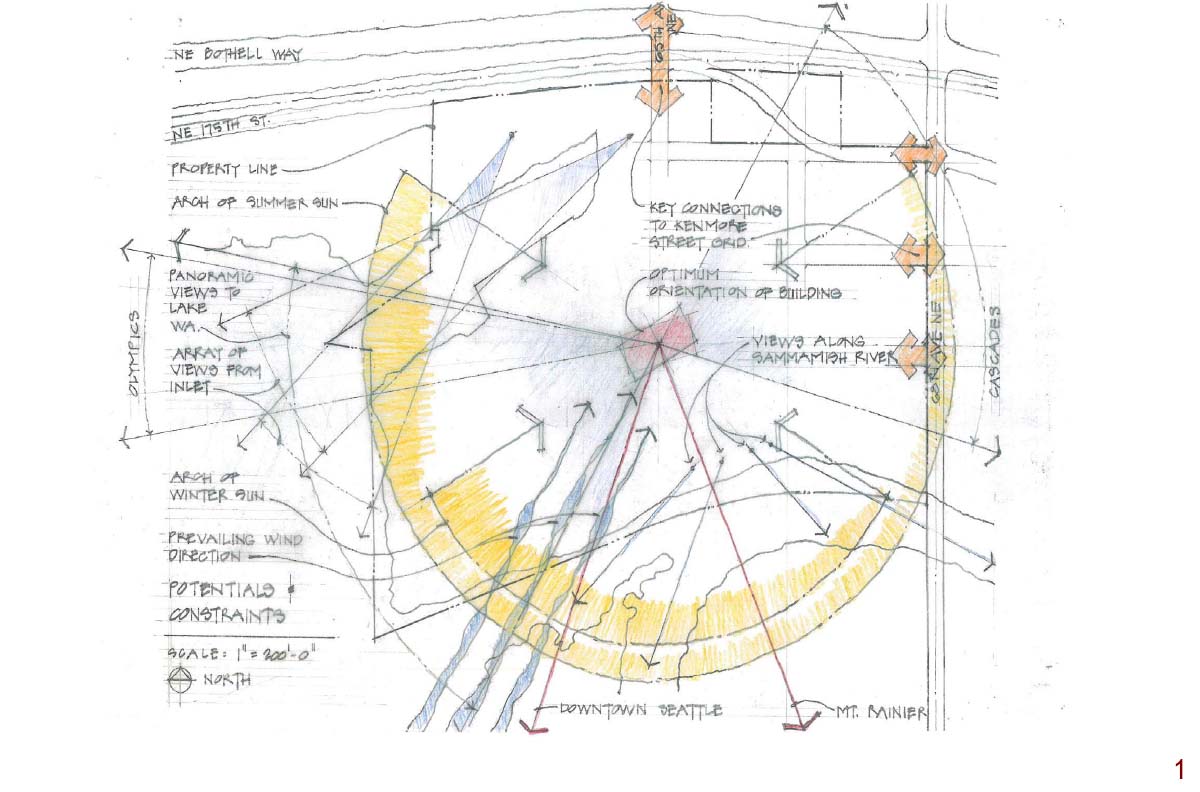
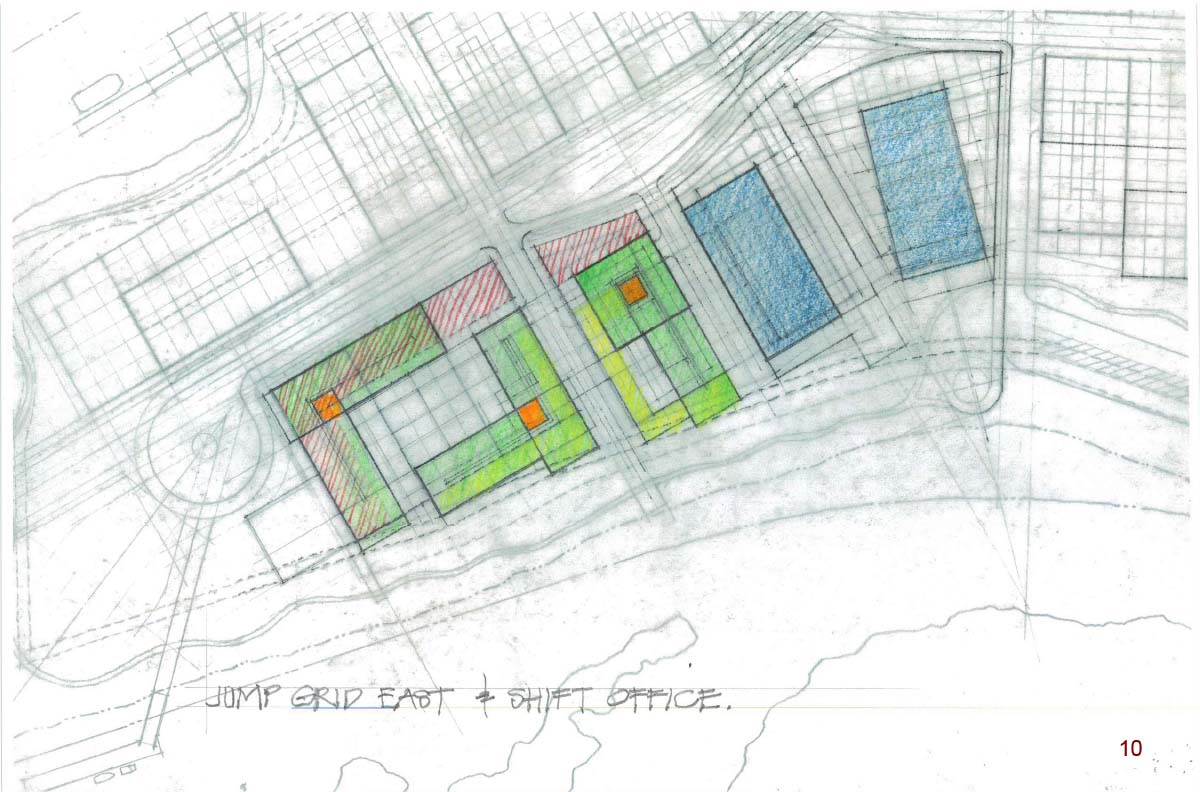
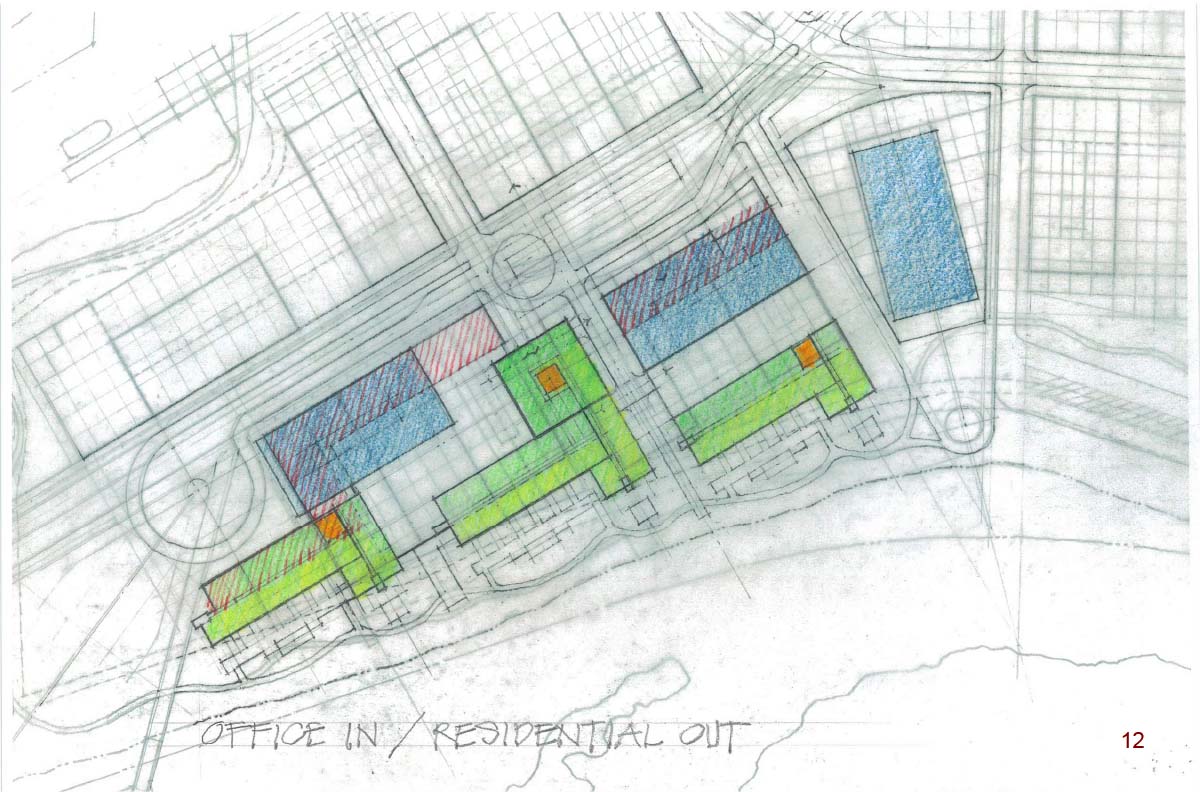
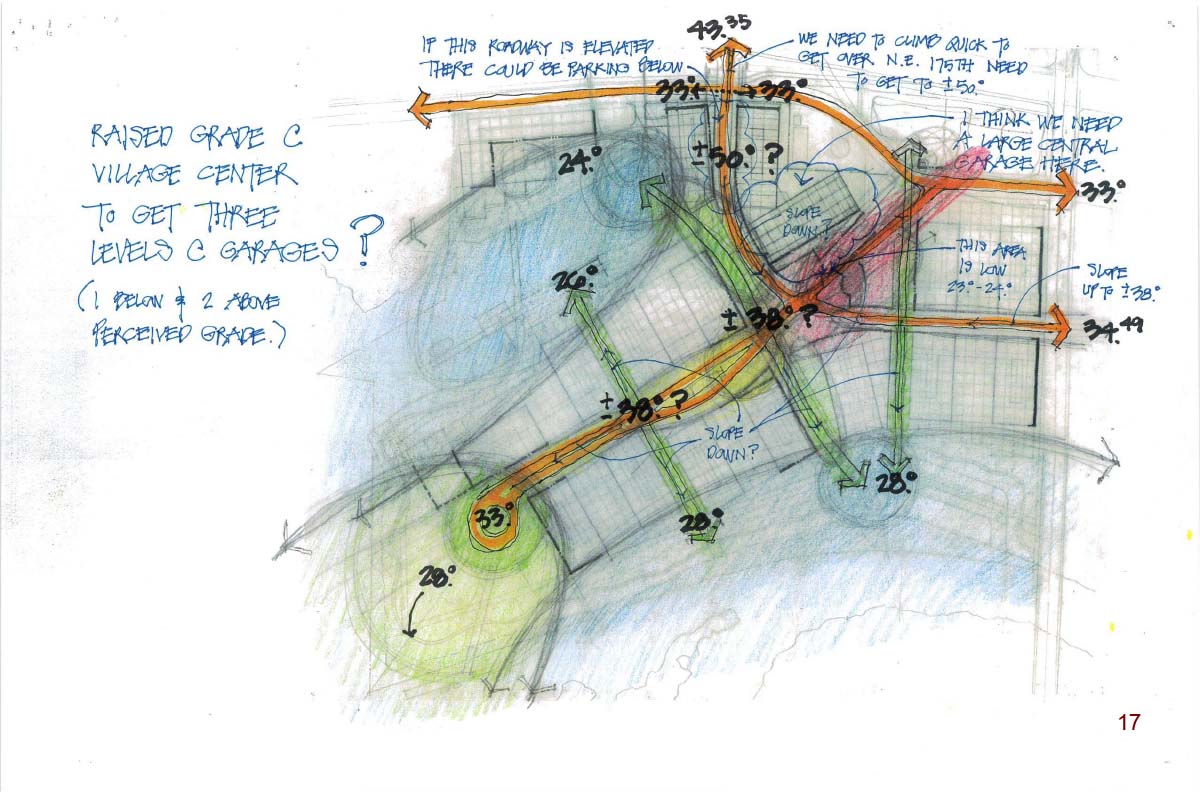
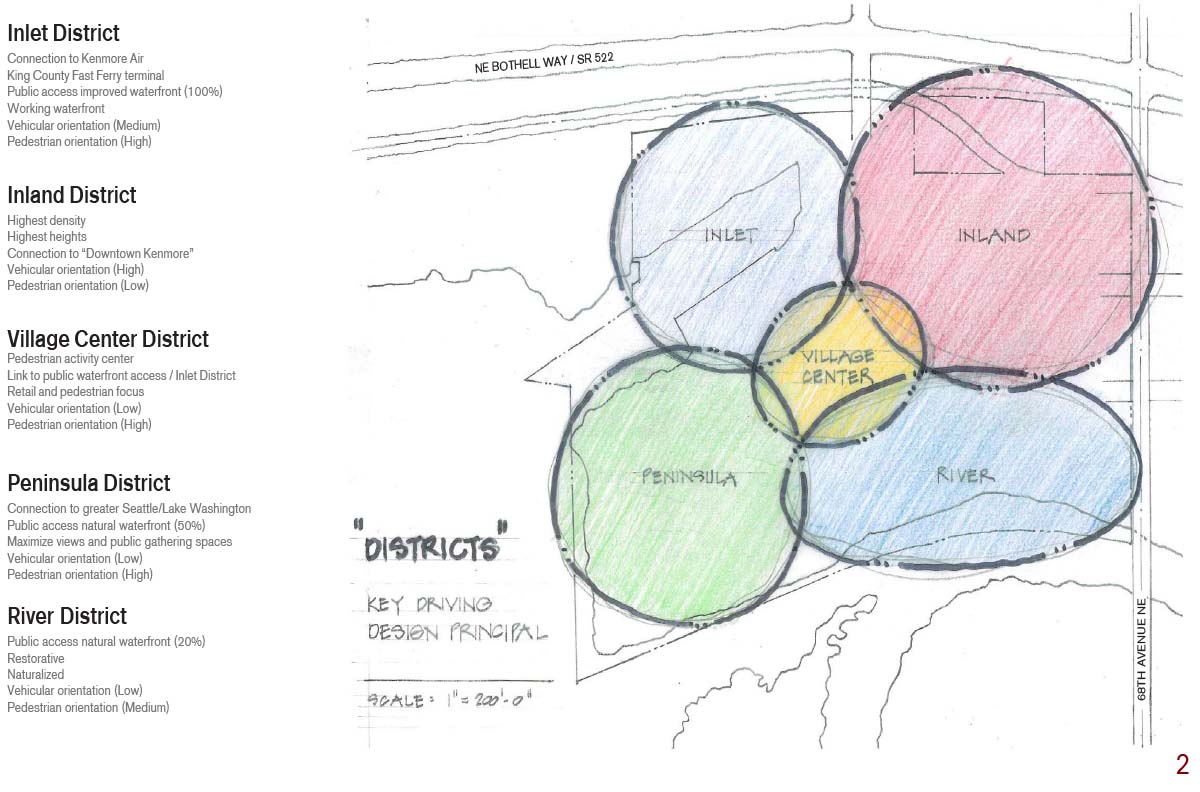
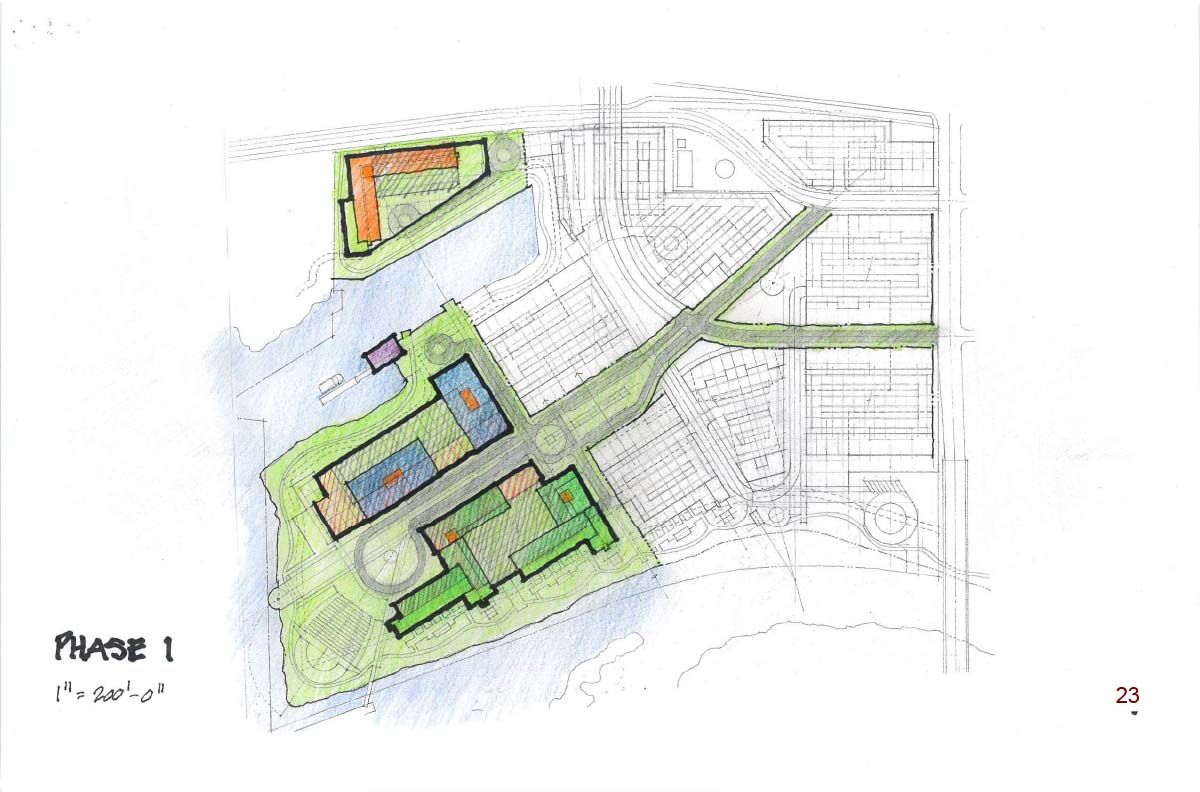
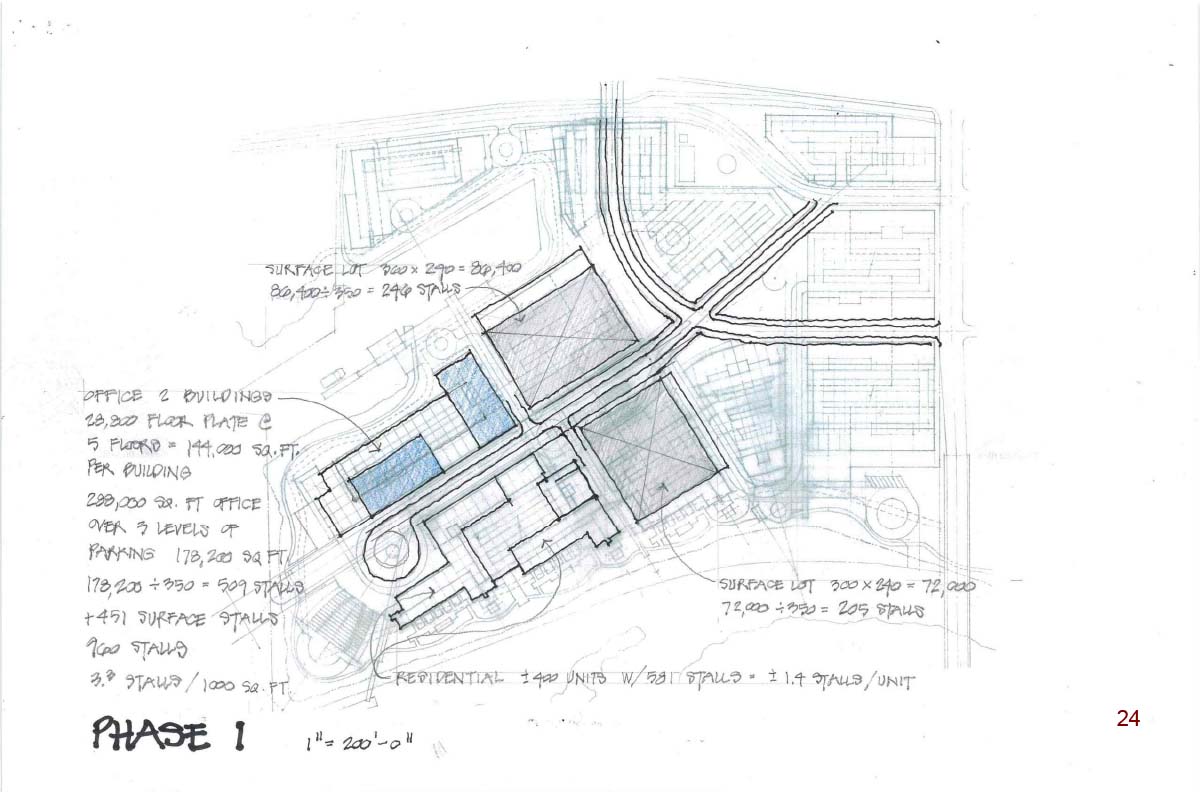
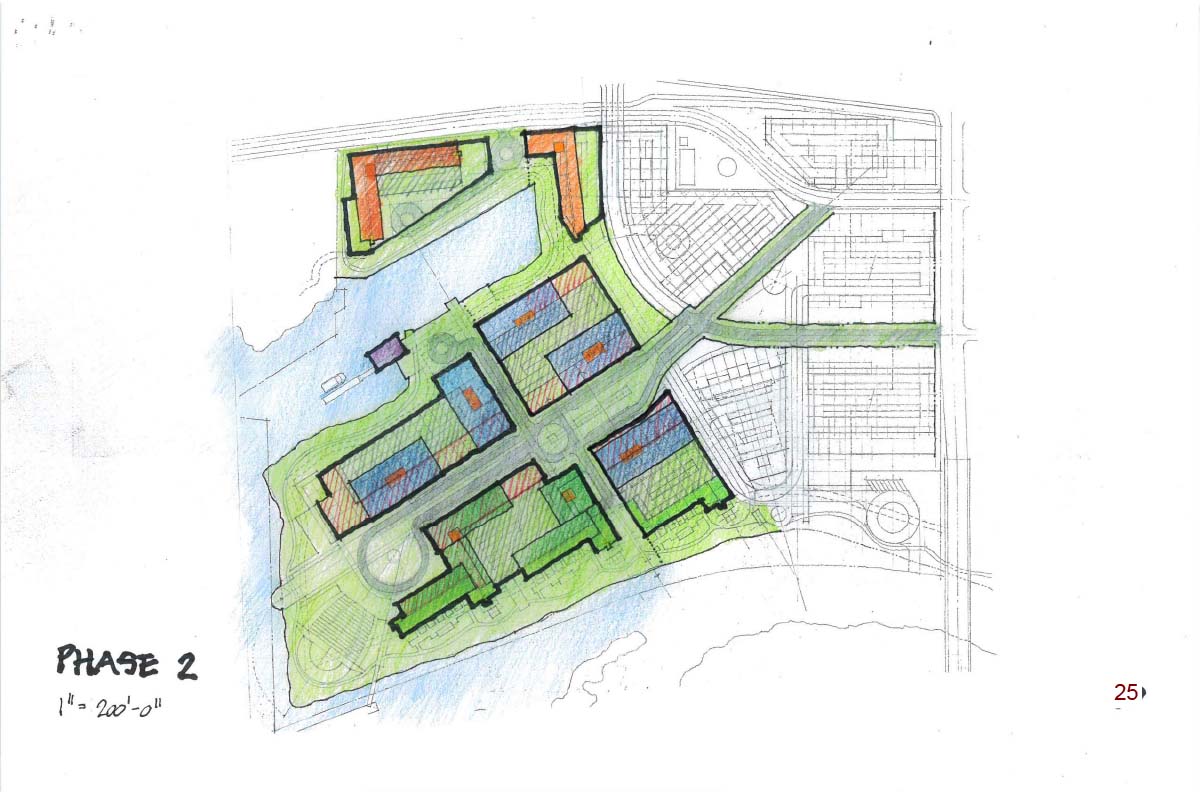
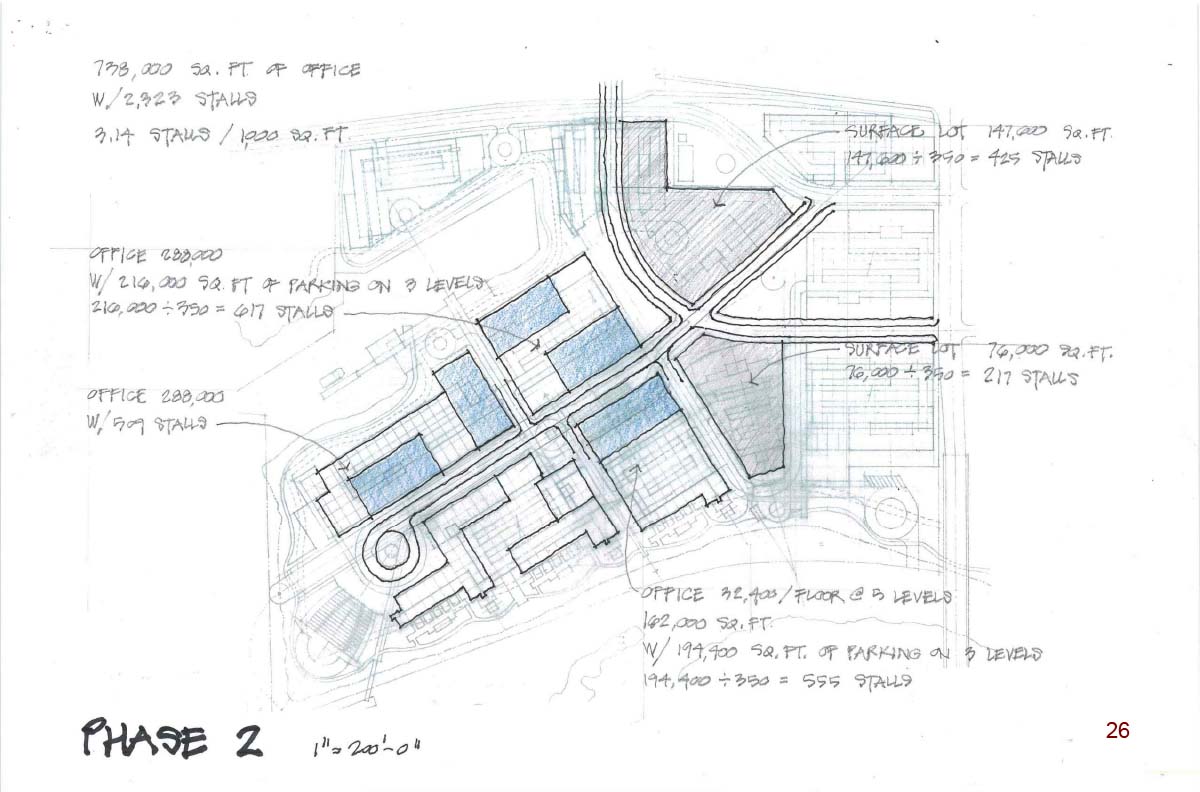
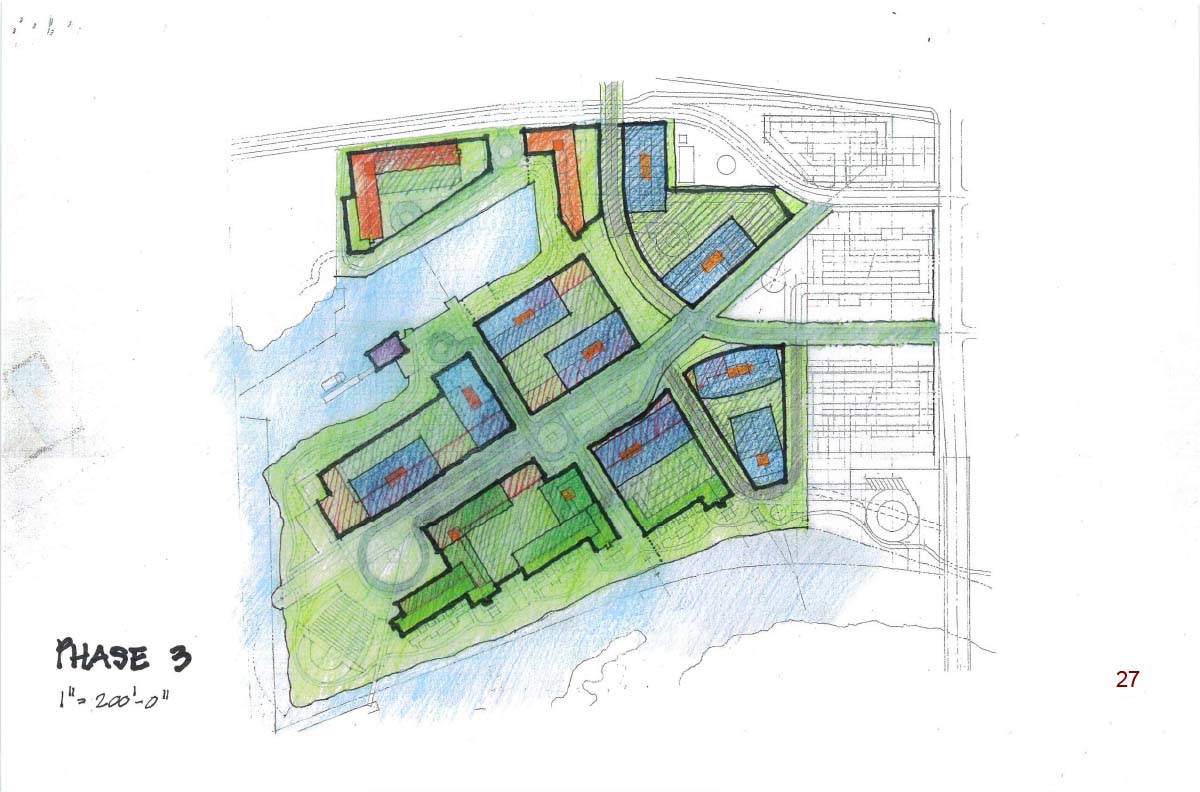
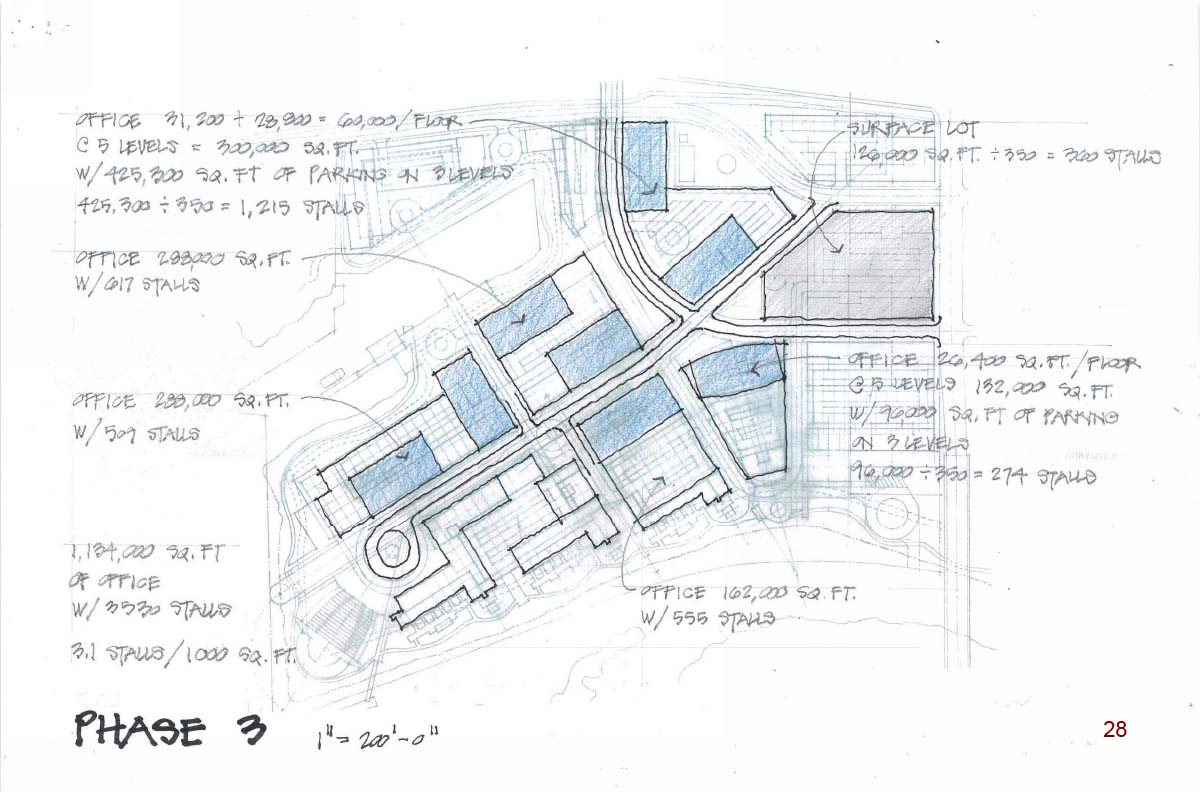
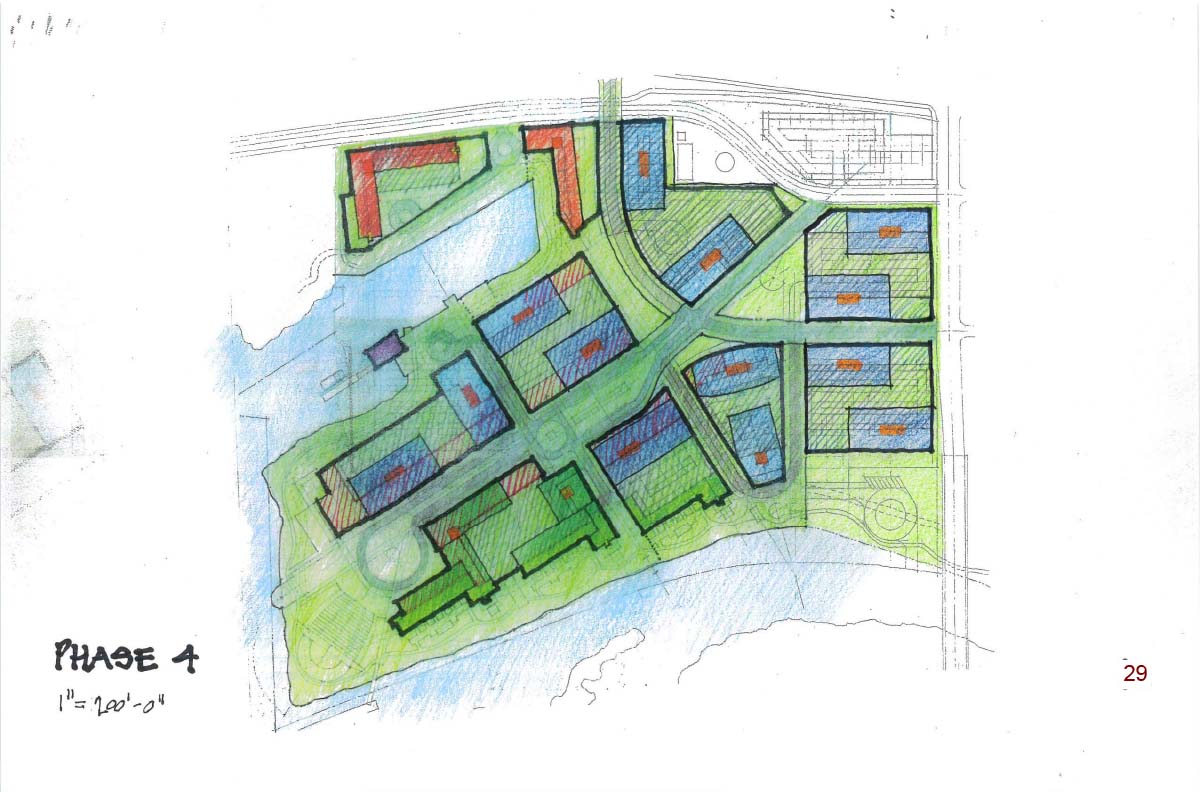
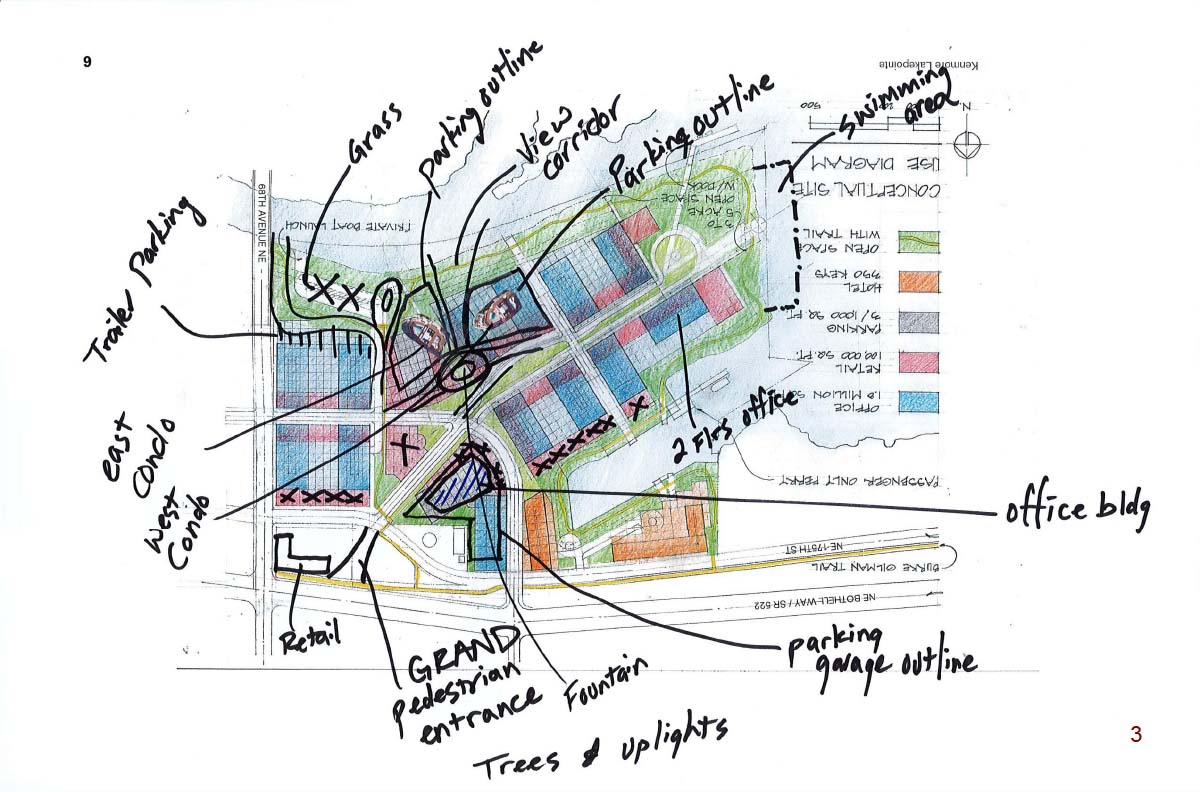
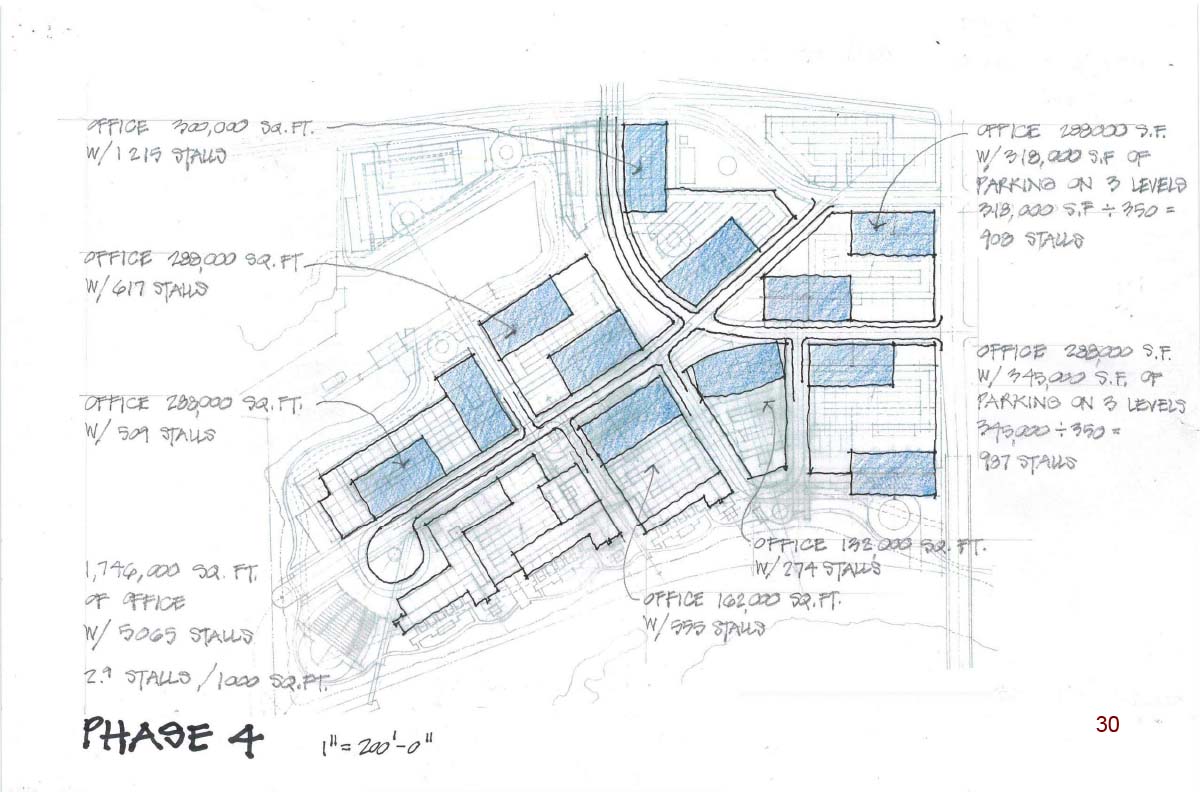
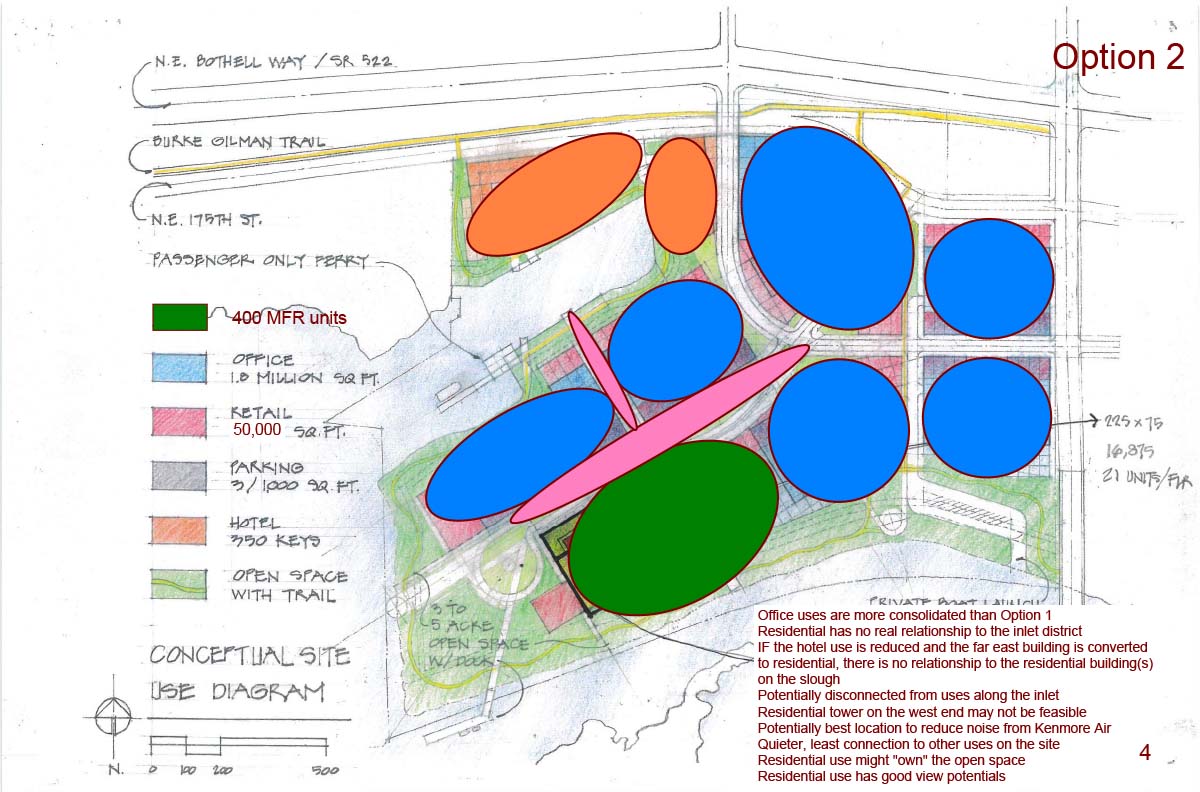
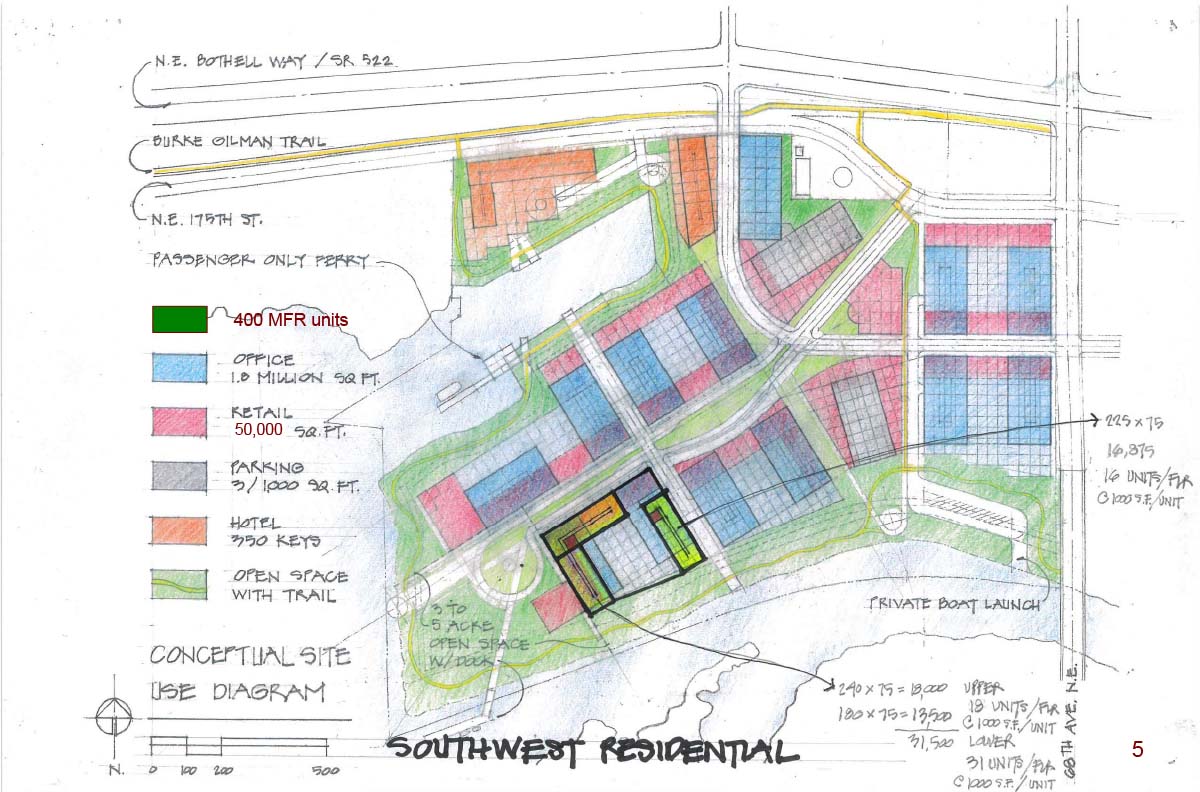
We began by interpreting the conceptual program and organizing the site into functional districts. Early diagrams explored how residential, office, retail, and public space could coexist while maintaining strong connectivity across the site and to the waterfront.
The plan evolved around several core ideas:
- A central pedestrian-oriented village core
- Strong visual and physical connections to the water
- Integrated parking within building massing
- Walkable streets and activated public spaces
- Balanced density with open space and view corridors
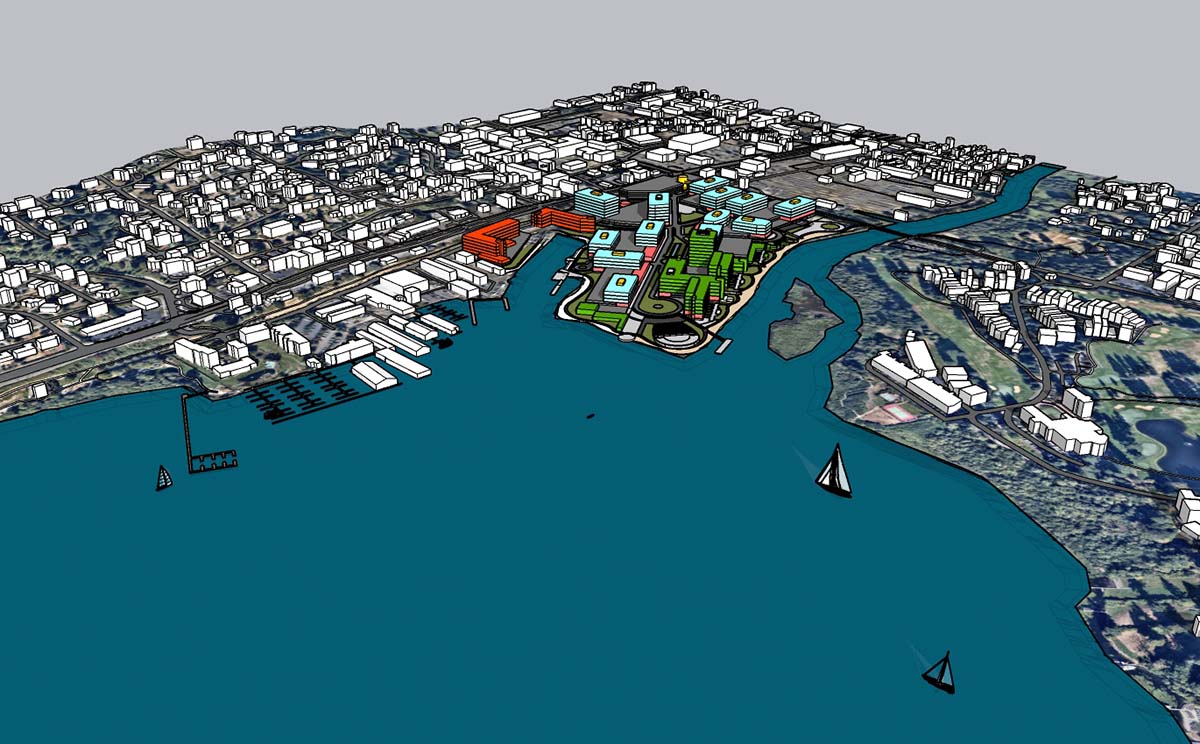
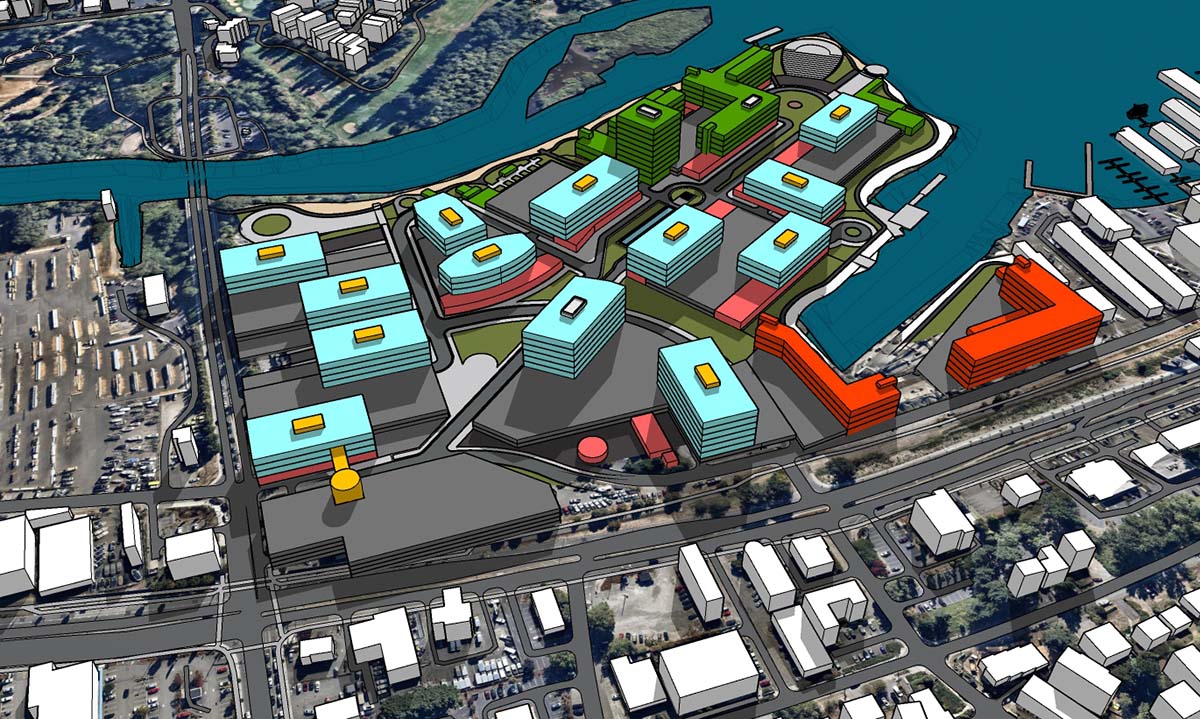
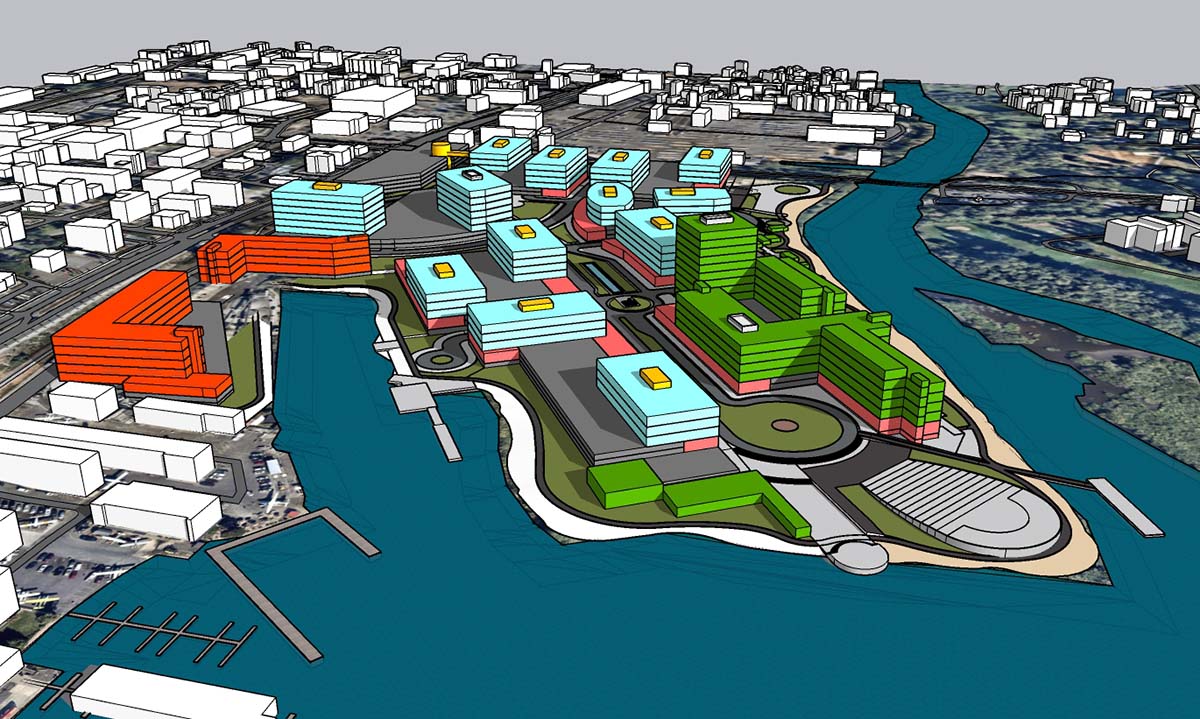
From there, we developed a unified architectural language across the entire project. Multiple building types were designed to feel cohesive while still supporting a diverse program. Programing was converted into 3D color coded preliminary design by 3DAStudio.
From Concept to Fully Realized Environment
The early stages were driven by hand sketches and conceptual diagrams exploring site organization, phasing, and building relationships.
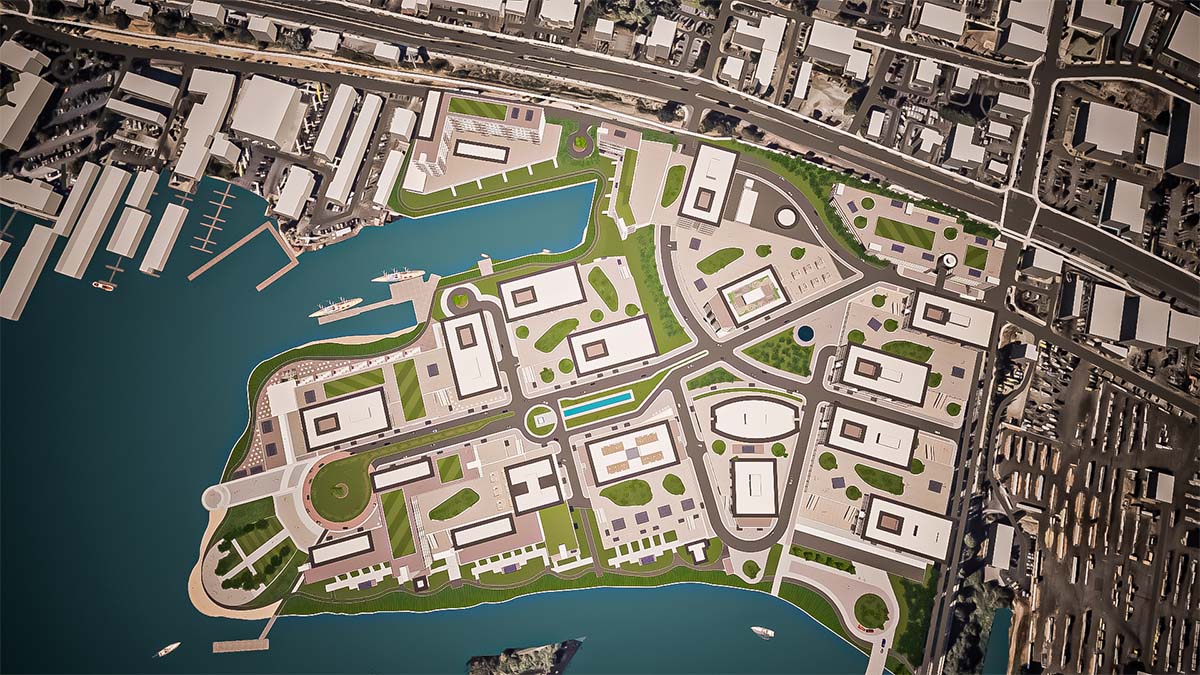
These concepts were then translated into a complete 3D environment that included:
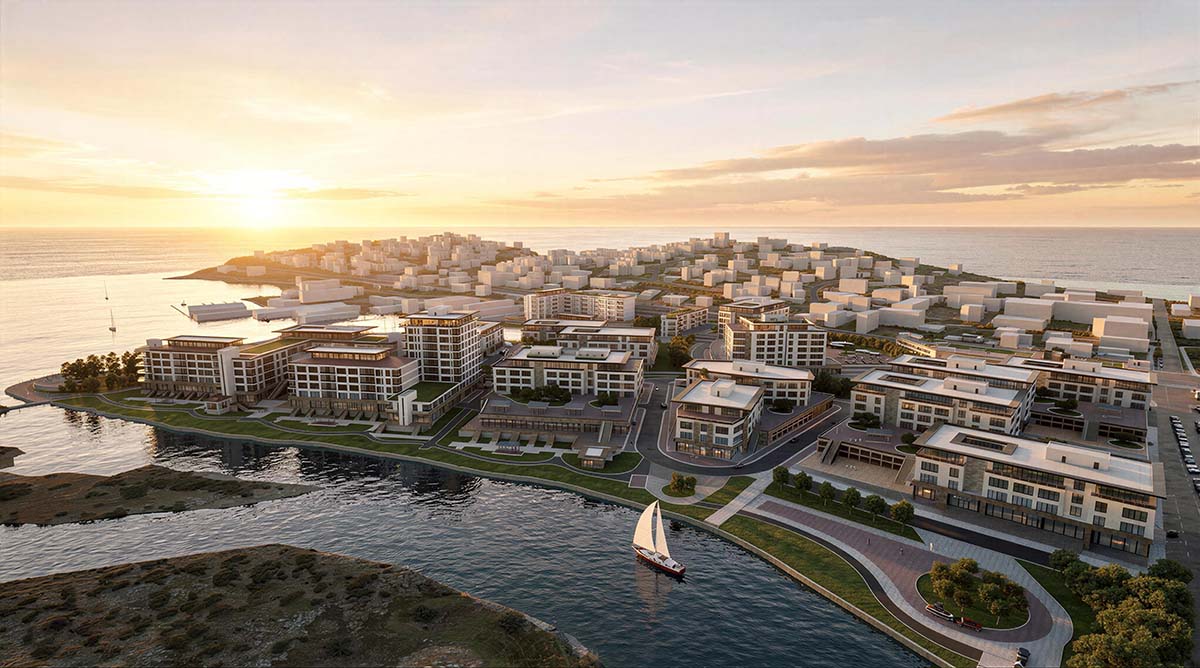
- Dozens of buildings across multiple phases
- Full site infrastructure and circulation
- Landscape design and public gathering spaces
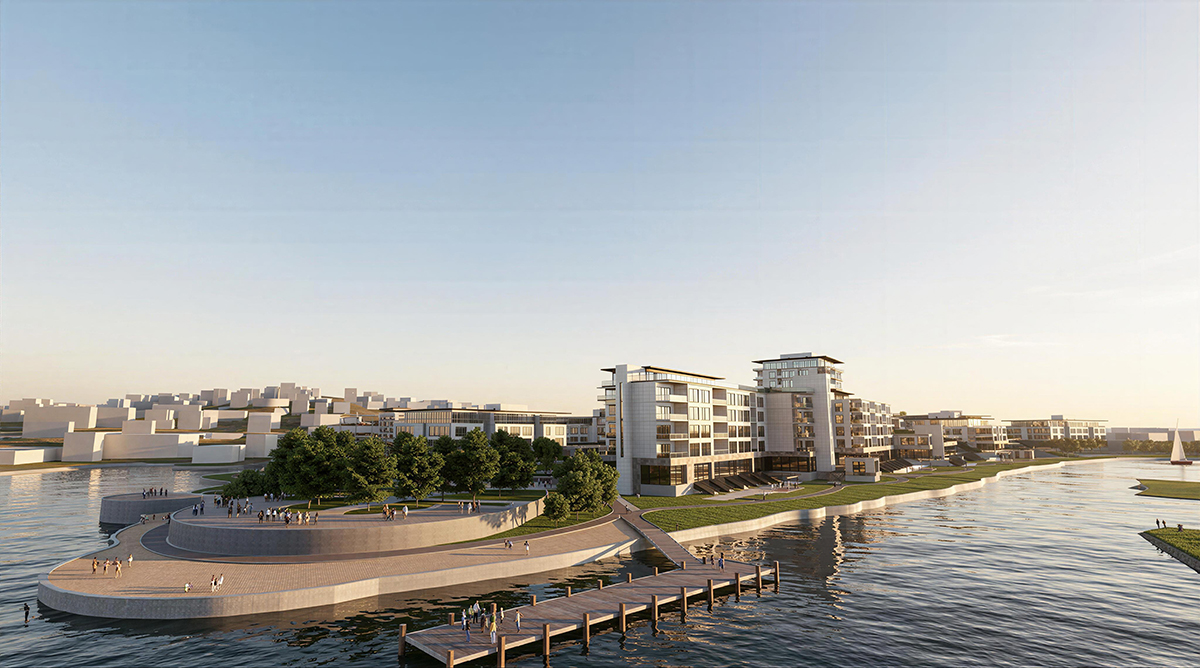
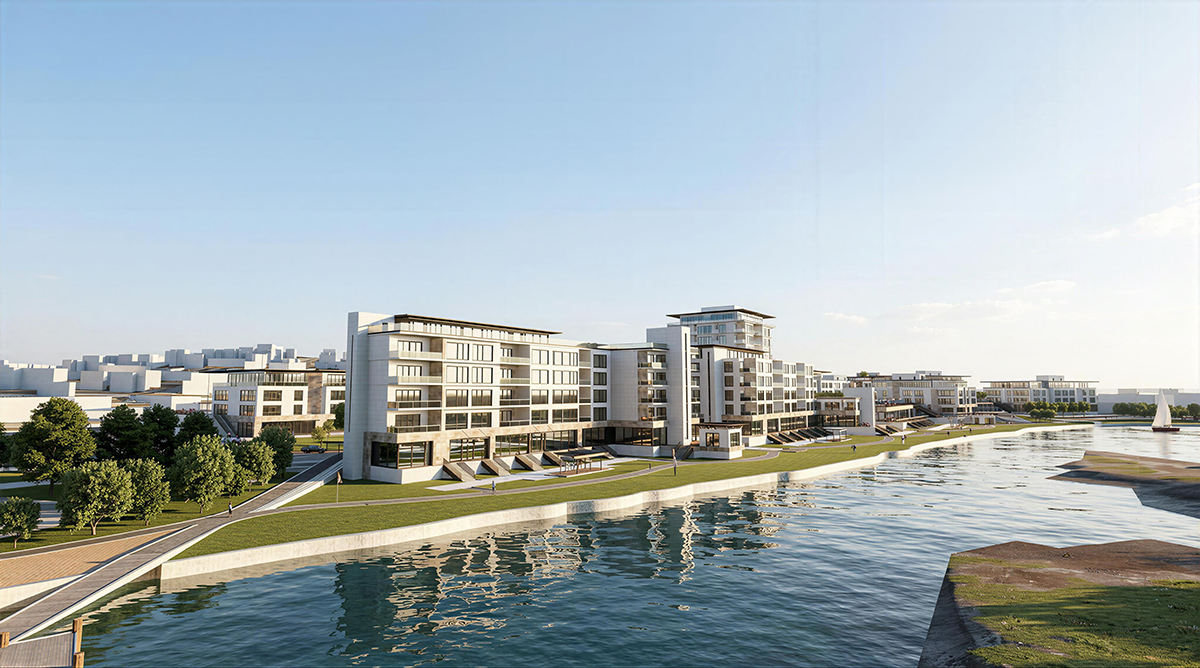
- Waterfront edges, pathways, and open space systems
This was not a single-building visualization. It was a fully realized urban-scale development built from the ground up.
Architectural Visualization Approach
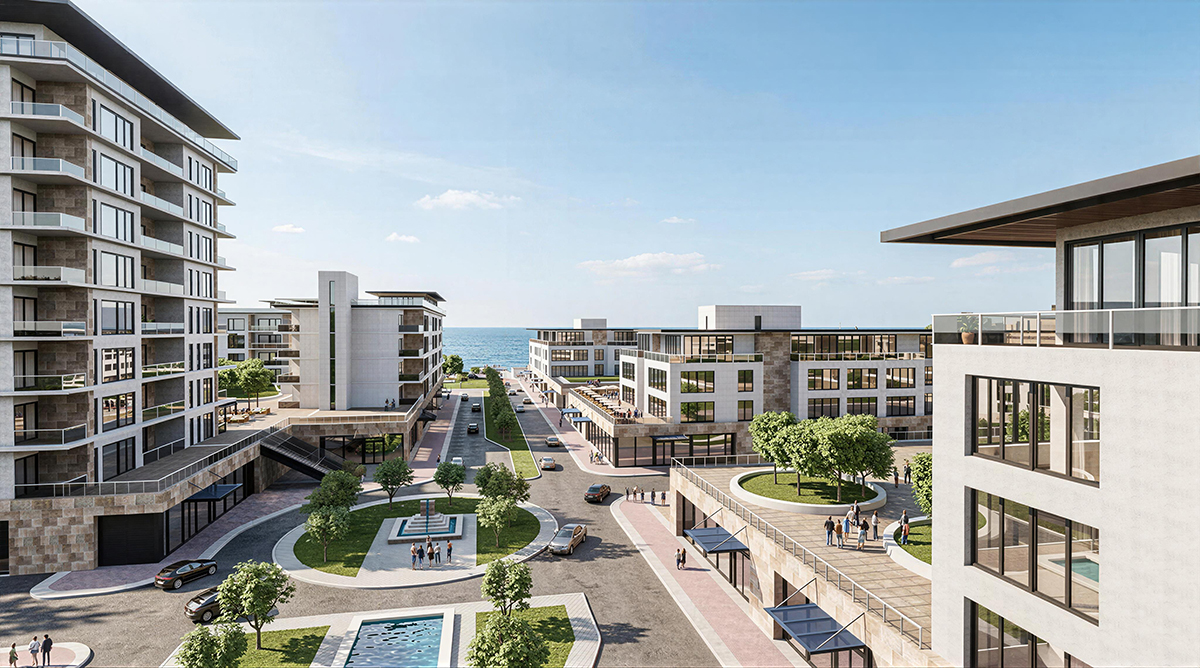
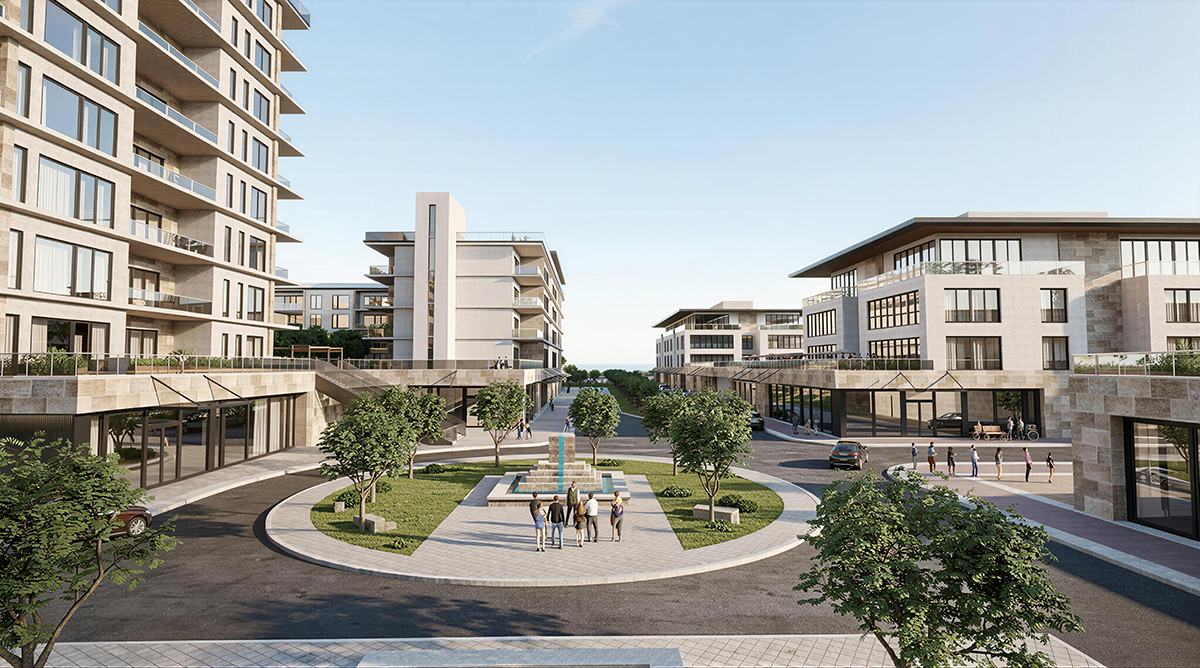
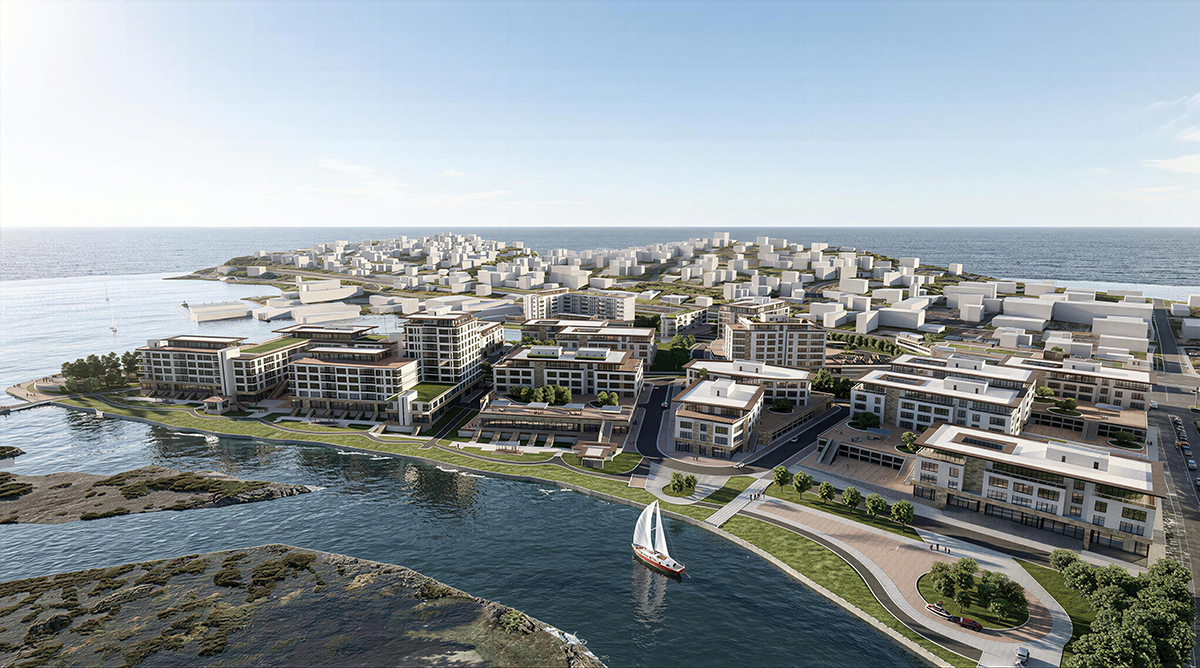
The goal of the imagery was to communicate more than architecture. It needed to convey experience.
Each rendering was designed to show:
- How people move through the space
- How public areas function and feel
- The relationship between buildings and the waterfront
- The scale and density of the development in a human context
Lighting, materials, and composition were carefully controlled to create a consistent visual language across all views. The imagery was designed to feel believable, livable, and grounded—something a developer could look at and understand as a real opportunity.
Scale & Complexity
The scope of the project was substantial.
The development explored:
- A large number of residential units distributed across the site
- Significant office and commercial components
- Retail integrated into a pedestrian-oriented core
- Structured parking systems embedded within the architecture
- Public open space, trails, and waterfront access
All of this had to be designed, modeled, and visualized as a cohesive system. Every building, street, and public space was part of a larger vision that needed to function together.
Outcome
The final deliverables included a comprehensive set of high-end renderings and a full animation of the project. These materials were created to support developer outreach and clearly communicate the potential of the site.
More importantly, the project transformed a loosely defined concept into a tangible vision. It gave stakeholders something real to evaluate, discuss, and respond to.
Why This Project Matters
This project highlights a core strength of 3DAStudio™.
We don’t just render finished designs. We step in earlier—when projects are still undefined—and help shape them into something that can move forward.
That means:
- Interpreting incomplete information
- Developing architectural direction
- Building full environments from concept
- Creating imagery that drives interest and decision-making
Visualization becomes part of the development process, not just the presentation of it.
Conclusion
The Kenmore Lakepointe project demonstrates the value of combining design, planning, and visualization into a single workflow.
From an underdefined industrial site to a fully realized waterfront district, this project shows what is possible when the vision is built, not just illustrated.