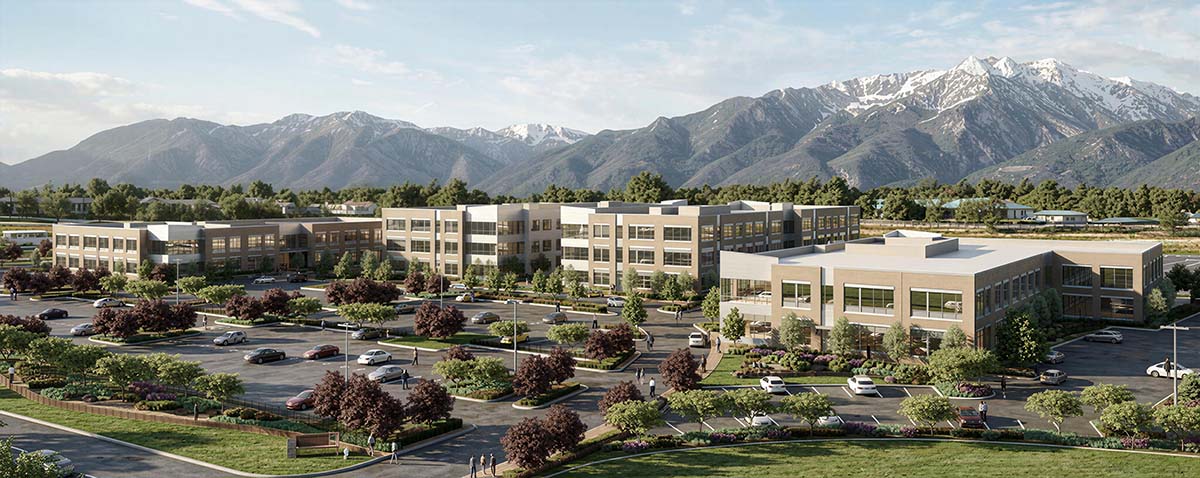
Lone Peak Corporate Center
Corporate Office Campus Visualization for Leasing, Marketing, and Design Review
Opening Reality — Office Developments Must Compete Visually Before They Compete in the Market
Corporate office developments are rarely sold on square footage alone. In competitive markets like the Salt Lake City region, projects must communicate quality, identity, and usability long before tenants ever walk the site. This is especially true in suburban office corridors where multiple developments compete side by side. Visualization becomes the tool that allows a project to stand out early in leasing, approvals, and investment discussions.
Project Overview
Lone Peak Corporate Center is a multi-building office campus located in Draper, Utah, along the I-15 corridor between Salt Lake City and Provo.
The campus includes:
- Multiple Class A and Class B office buildings
- Building sizes generally ranging from approximately 50,000 to 90,000 square feet
- Two- and three-story structures designed for flexible tenant layouts
- Surface parking with strong parking ratios typical of suburban office environments
- Immediate access to major transportation routes and surrounding amenities
The development was designed to accommodate a range of professional tenants while providing a clean, modern, and accessible business environment.
Role and Scope — Visualization Across Multiple Buildings
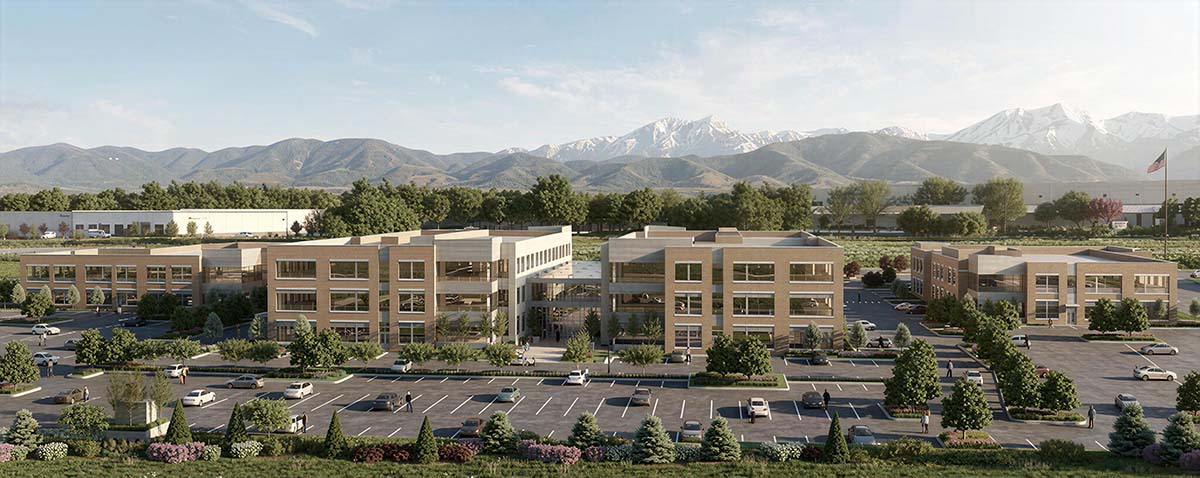
3DAStudio™ provided architectural visualization services across multiple buildings within the Lone Peak campus.
The scope included:
- Exterior architectural renderings for several office buildings
- Consistent visual language across the campus
- Marketing imagery for leasing and promotion
- Design review imagery for stakeholder and jurisdictional presentation
Rather than treating each building as an isolated project, the work required approaching the campus as a unified development while still giving individual buildings a distinct presence.
The Real Challenge — Making Repetitive Typology Feel Intentional
Office campuses share many of the same challenges as industrial developments. The buildings can quickly become repetitive, and without careful attention, they risk feeling generic.
The challenge was to:
- Differentiate buildings while maintaining overall cohesion
- Elevate straightforward office forms through composition and material expression
- Create a sense of place across the campus
- Present the development as a desirable work environment rather than just available square footage
This required more than documenting architecture. It required framing it correctly.
Visualization Strategy — Elevating the Everyday Office Building
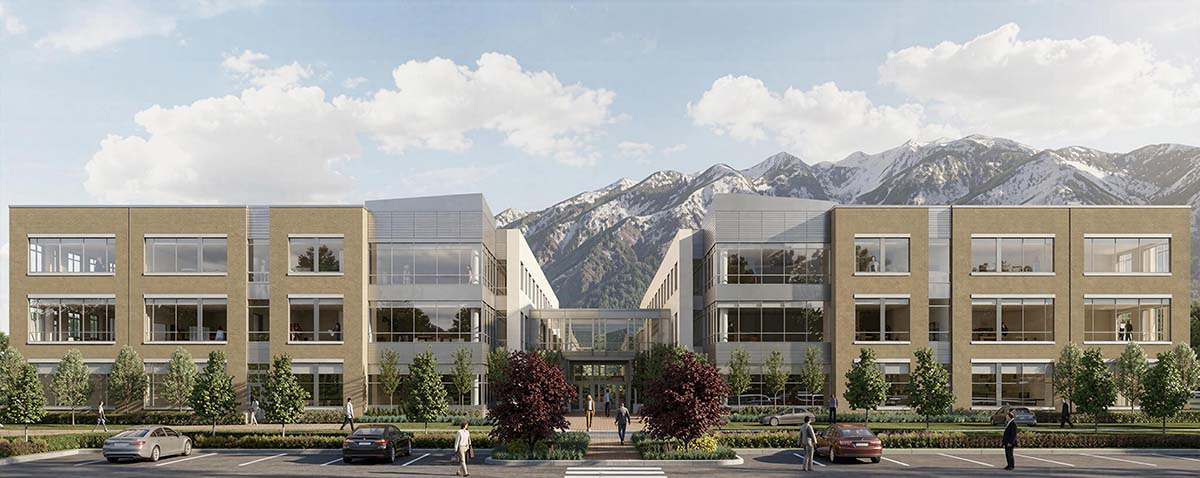
The approach focused on composition, lighting, and site integration.
Key strategies included:
- Strong entry-focused perspectives emphasizing identity and accessibility
- Clean, professional lighting that reinforces material quality
- Landscape used intentionally to frame buildings and soften scale
- Inclusion of vehicles and people to communicate real-world use and proportion
Even though these are functional office buildings, the imagery positions them as high-quality workspace environments.
Campus Cohesion — One Development, Multiple Identities
With multiple buildings involved, consistency was critical.
The renderings maintain:
- A unified palette of materials and color tones
- Repeating architectural elements that tie the campus together
- Consistent camera language and visual hierarchy
At the same time, individual buildings are distinguished through:
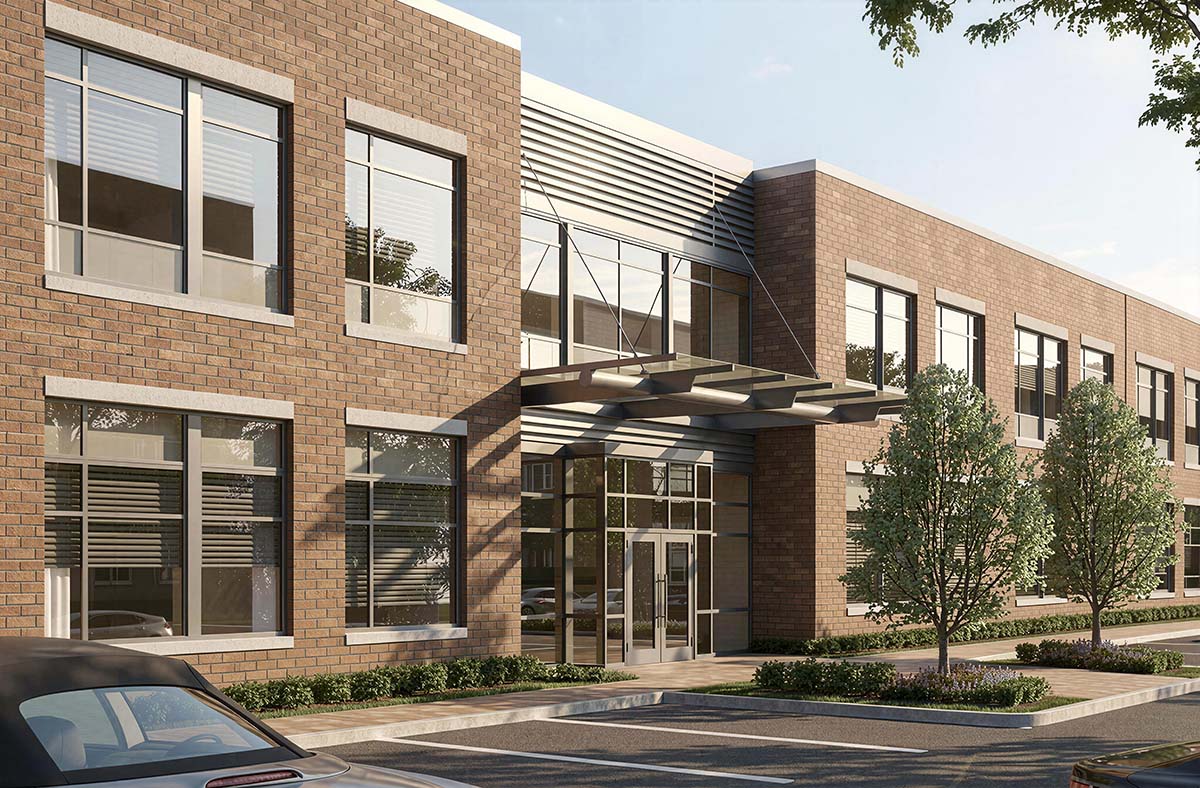
- Entry features and massing articulation
- Subtle variations in color accents
- Unique composition and viewpoint selection
This balance prevents the development from feeling repetitive while still reading as a cohesive whole.
Use in Leasing and Development Marketing
The renderings were used to support leasing and marketing efforts across the development.
They allowed project teams to:
- Present buildings prior to construction completion
- Communicate quality and professionalism to prospective tenants
- Show how individual buildings relate to the overall campus
- Reinforce accessibility and usability of the site
In competitive suburban office markets, this level of clarity directly supports leasing success.
Design Review and Jurisdictional Support
The imagery also played a role in design review and approvals.
Renderings helped demonstrate that:
- The development would present a clean, modern, and professional appearance
- Building massing and layout were appropriate for the site
- Landscape and site design would mitigate scale and enhance visual quality
For growing areas like Draper, where commercial development is expanding, this type of clarity is important for both planners and stakeholders.
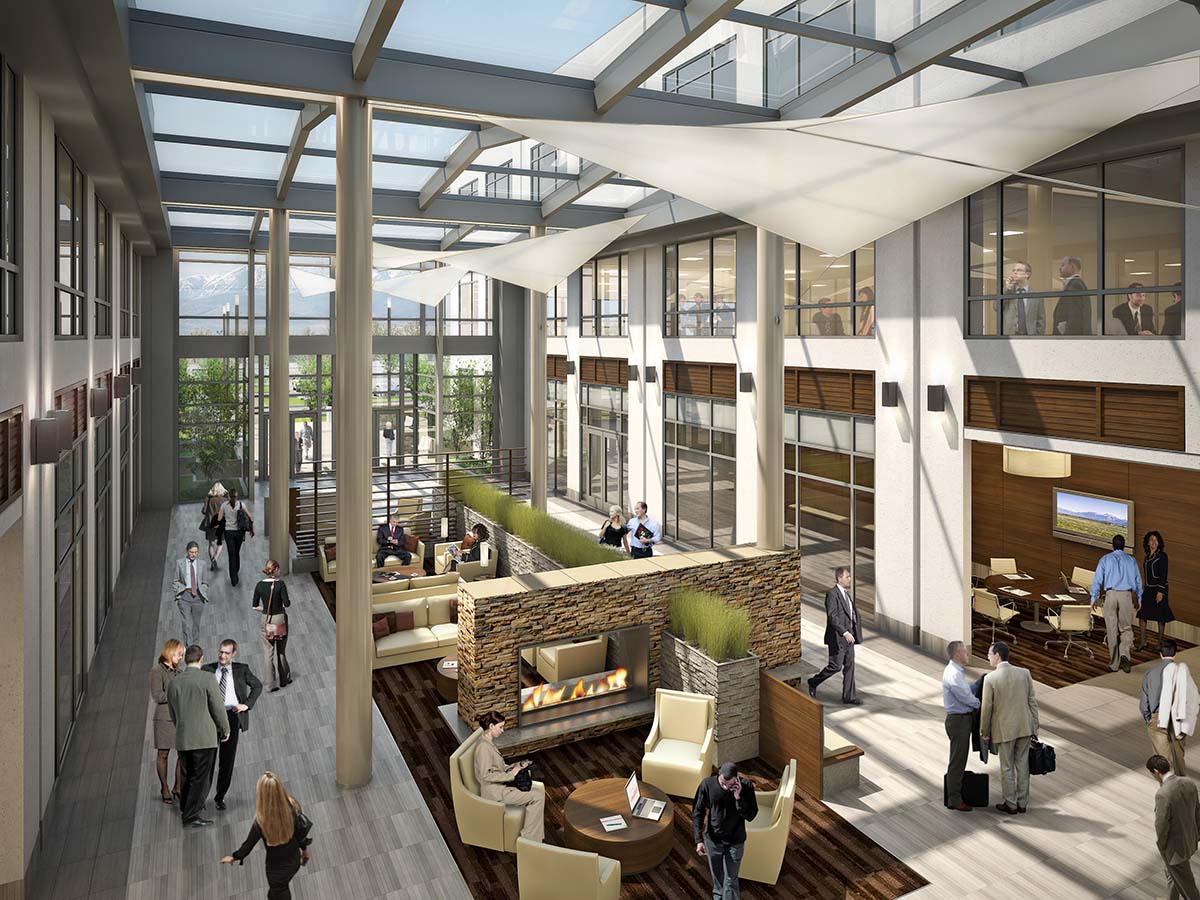
Where This Fits Today
Projects like Lone Peak Corporate Center represent a common but highly competitive development type. Office campuses must balance efficiency with identity, and increasingly, they must do so visually before tenants ever interact with the space.
Project Takeaways
- Office and corporate campuses benefit from strong visual positioning early in development
- Consistency across multiple buildings is critical to perceived quality
- Standard building types can be elevated through composition and presentation
- Visualization plays a key role in both leasing and approval processes
This project reflects a consistent approach: treat every building as something worth presenting well, regardless of typology.
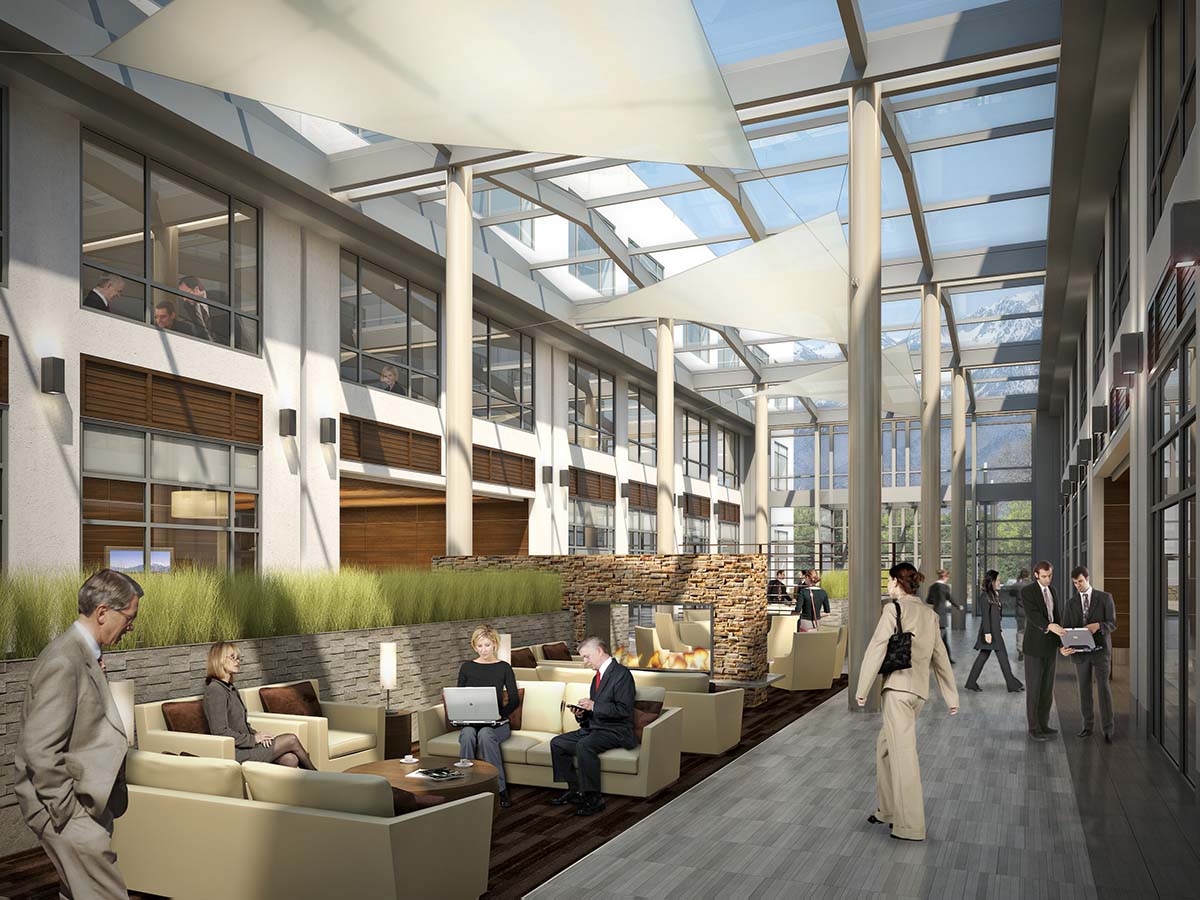
CAHDD Transparency — How These Images Were Created
Most of our work is CAHDD Stage 0 or Stage 1. That means it is either fully human-created or built using standard digital tools with complete human control. That is still the foundation of how we work.
For some of the images in this case study, we pushed into CAHDD Stage 3. These were run through an AI-based enhancement process to improve resolution, color, and lighting. The design, modeling, composition, and intent are all ours, but the AI is participating in the refinement. Because of that, we are calling it what it is.
This is not a replacement for how we work. It is a controlled use of a tool. We are testing it, understanding it, and being upfront about it.
CAHDD (Computer Aided Human Designed & Developed) is a framework we created to make this kind of transparency simple and visible. It is not about enforcement or gatekeeping. It is about showing where the human hand is and where the machine starts to get involved.
CAHDD Stages as they apply to architectural visualization:
Stage 0 — Fully hand-created work with no digital tools.
Stage 1 — Standard digital workflow. Modeling, rendering, and post-production with full human control.
Stage 2 — Procedural or automated processes that assist, but do not influence creative decisions.
Stage 3 — Human-directed work with AI assisting in refinement such as lighting, resolution, or visual polish.
Stage 4 — AI-generated content with human direction and selection.
Stage 5 — Fully AI-generated work with minimal human input.
Stage X — Mixed or evolving workflows that combine multiple stages.
Full framework and philosophy: CAHDD.org