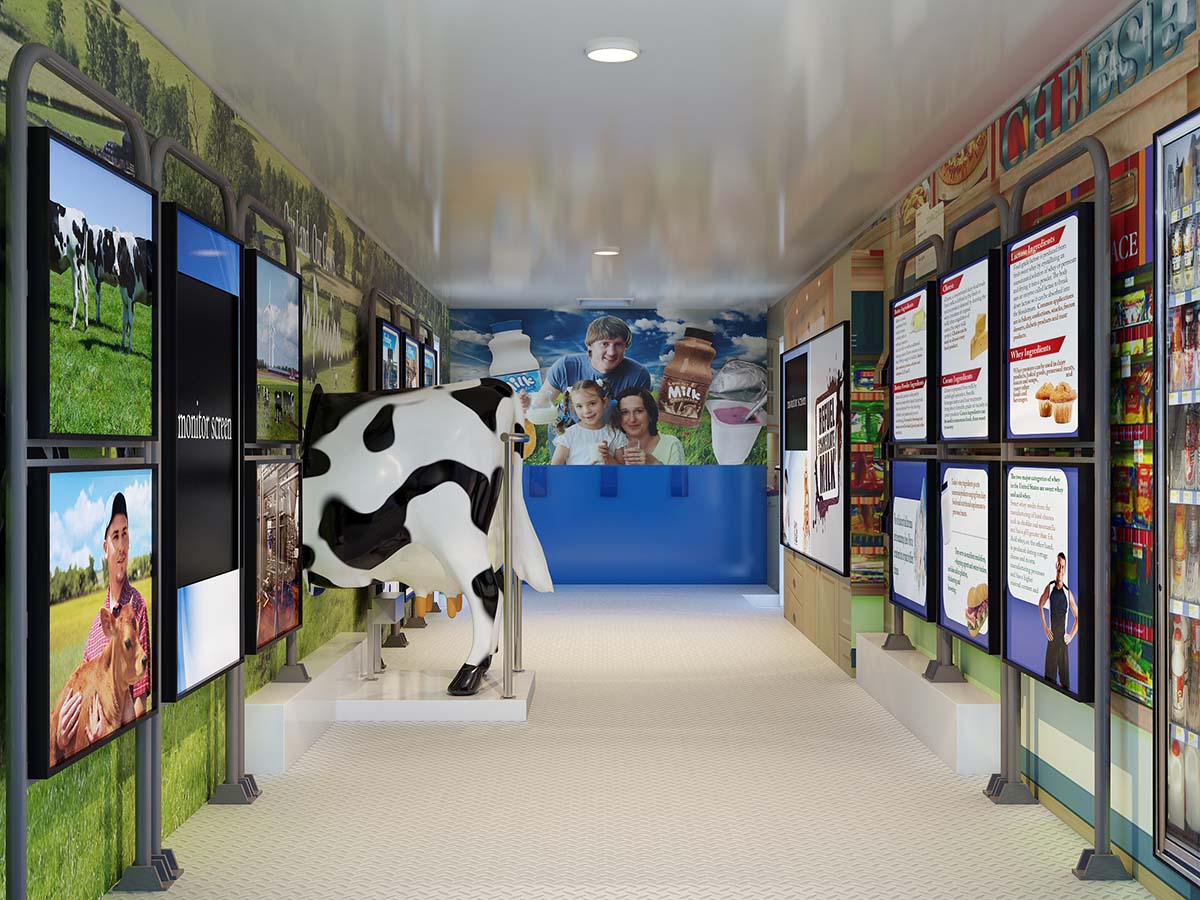
Promotional Dairy Trailer
Mobile Marketing Visualization for Product Branding and Public Engagement
Opening Reality — Marketing Projects Must Be Tested Before They Are Built
Unlike architecture, where design is often driven by function and regulation, marketing-driven projects succeed or fail based on message, clarity, and public perception. Once something is fabricated and deployed, especially a mobile promotional unit, changes become expensive and difficult. Visualization allows those decisions to be made early, before fabrication, before branding is locked in, and before money is committed.
Project Overview
The Promotional Dairy Trailer was a proposed mobile marketing unit developed for the Texas dairy industry. The concept was to create a traveling promotional trailer that would tour major cities and events across Texas, including markets such as Dallas, Houston, Austin, Santa Fe, and Fort Worth.
The trailer was designed as an educational and promotional platform, providing a physical environment where the public could engage with dairy products, learn about the industry, and experience branded messaging in a controlled, immersive setting.
Our role focused on developing a full set of 3D visualizations used to refine both the physical design of the trailer and the messaging strategy before fabrication.
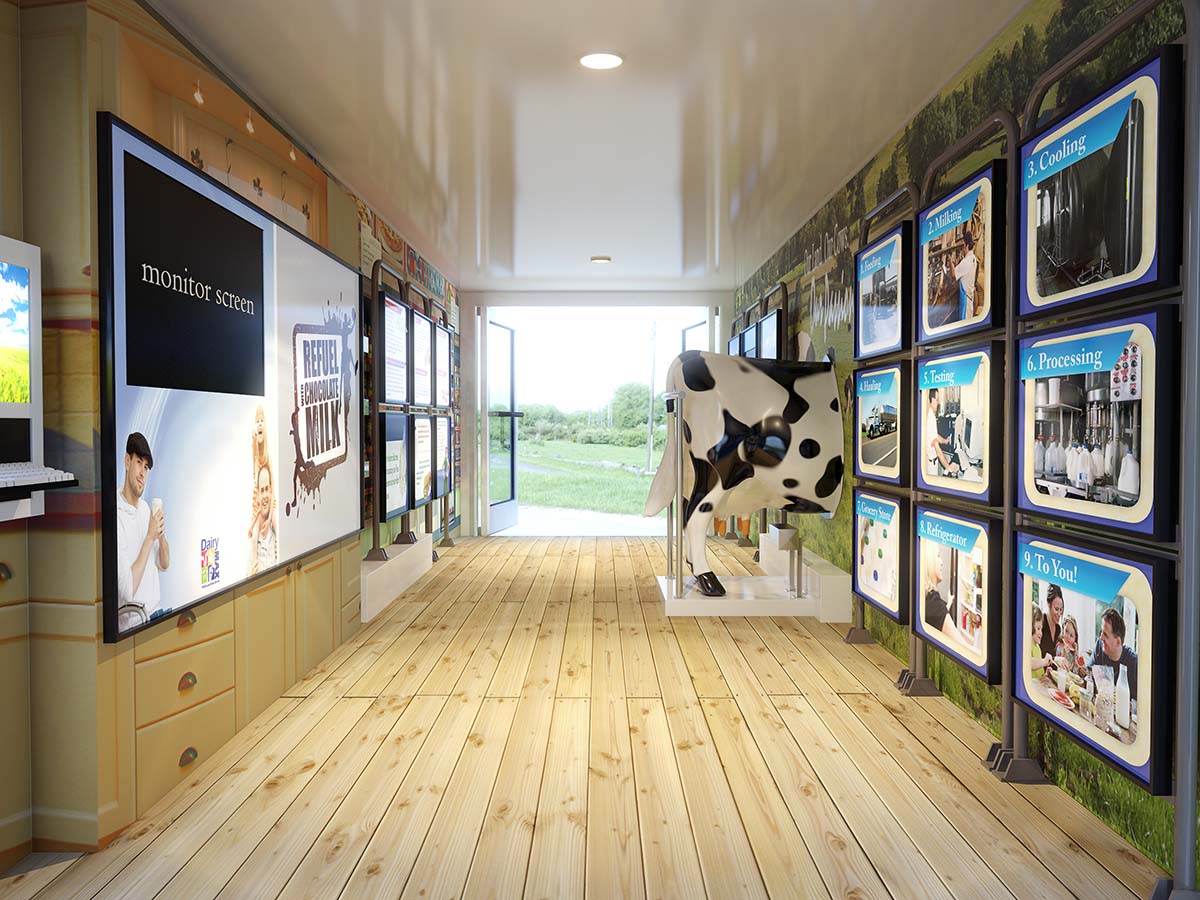
The Real Challenge — Designing Message and Object at the Same Time
This project was not just about designing a trailer. It was about designing communication.
The challenge was to align:
- Physical layout of the trailer
- Graphic branding and messaging
- Public interaction and flow
- Visual identity of the dairy industry
Unlike a static product, this trailer needed to function as a mobile experience, meaning every surface, angle, and interaction point contributed to the message.
Visualization Strategy — Iteration Before Fabrication
The visualization process became a design tool, not just a presentation tool.
The renderings were used to:
- Explore multiple trailer configurations
- Test graphic layouts and branding strategies
- Evaluate visibility and readability from different angles
- Refine material choices and finishes
This allowed the marketing team and stakeholders to compare options and make informed decisions before committing to construction.
Focus Group Integration — Using Visualization as Feedback Tool
One of the most important aspects of this project was the use of imagery in focus group studies.
The renderings were presented to test audiences to evaluate:
- Clarity of messaging
- Visual appeal
- Brand recognition
- Public engagement potential
Feedback from these studies directly informed design refinements, allowing the trailer concept to evolve based on real audience response rather than assumptions.
This is where visualization becomes more than representation—it becomes part of the decision-making process.
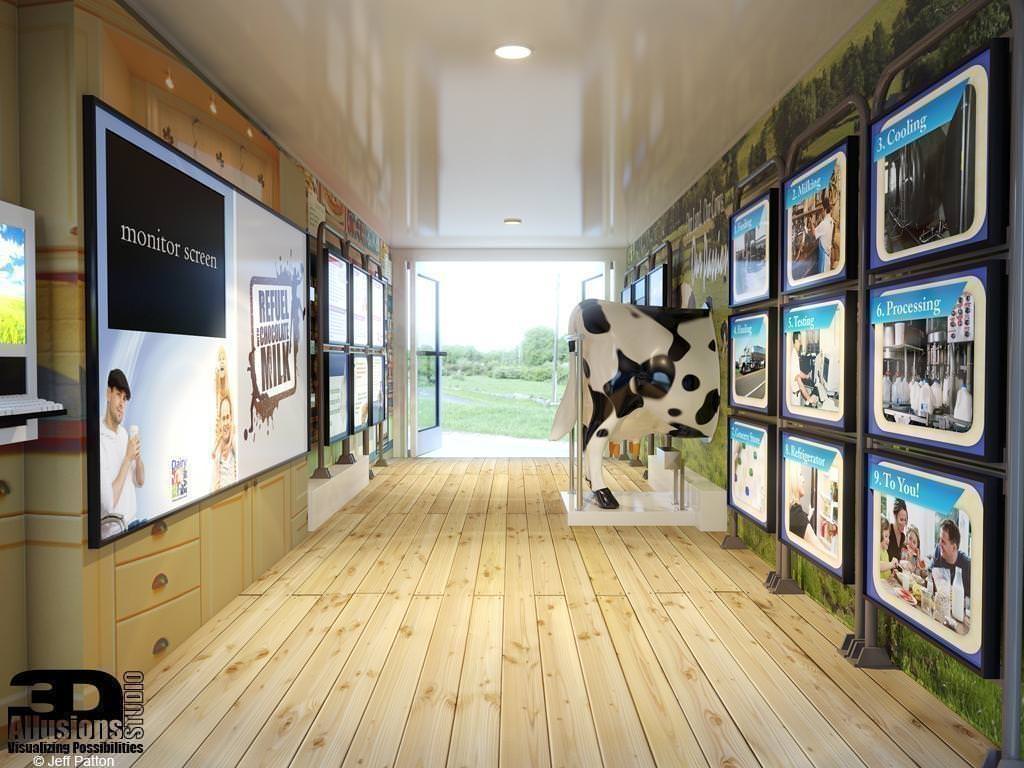
Product and Marketing Integration — Expanding Beyond Architecture
This project represents a shift from traditional architectural visualization into product illustration and marketing design.
Key aspects included:
- Vehicle-based design and proportions
- Integration of large-scale graphics and branding
- Consideration of mobility, setup, and deployment
- Designing for visibility in event environments
This type of work requires a different mindset than building design, focusing on communication, branding, and user interaction.
Mobility — Designing for Multiple Environments
Unlike a fixed structure, the trailer needed to function in a wide range of environments:
- Urban event spaces
- Fairgrounds and outdoor festivals
- Parking lots and temporary installations
The visualization helped test how the trailer would appear and perform across these different contexts, ensuring consistency in branding and presence.
Operational Clarity — What the Project Delivers
The visualization helped define a clear concept for the trailer as:
- A mobile educational platform for the dairy industry
- A branded marketing environment
- A flexible event-based installation
- A transportable structure designed for repeated deployment
This clarity is critical when multiple stakeholders—marketing teams, fabricators, and sponsors—are involved.
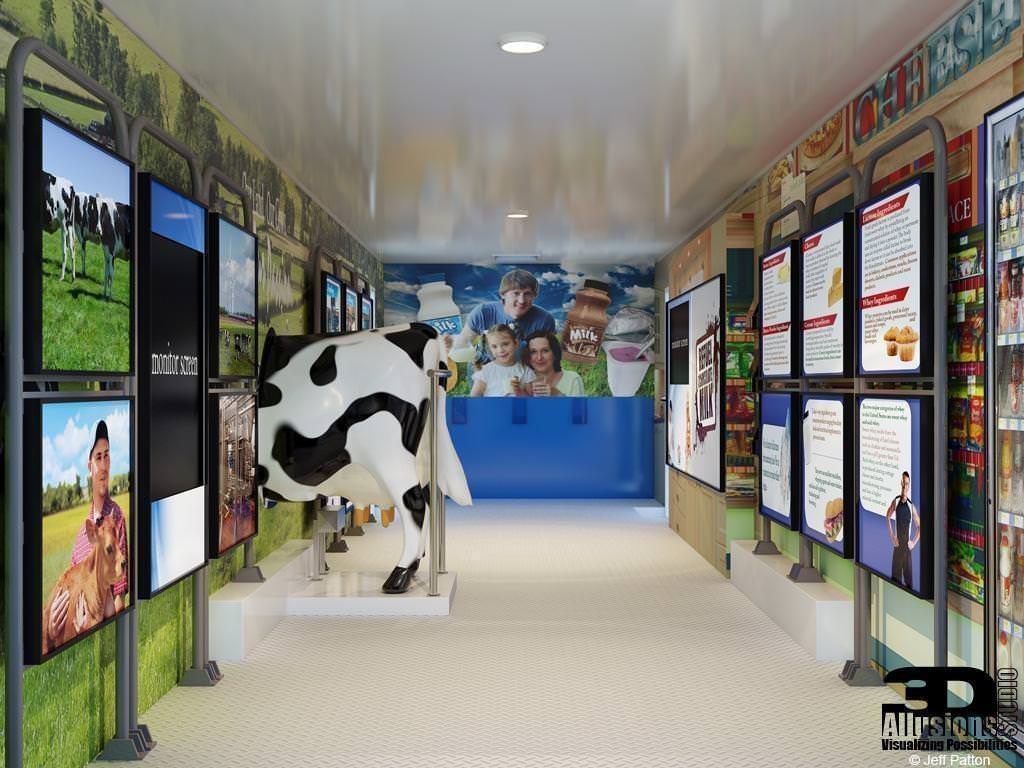
What This Allowed the Client to Do
The renderings provided a foundation for decision-making that extended beyond design.
They allowed the client to:
- Refine both form and message before fabrication
- Test concepts with real audiences
- Align stakeholders around a unified direction
- Reduce risk associated with building a physical prototype
In marketing-driven projects, this kind of early validation is extremely valuable.
Positioning — Visualization as a Strategic Tool
This project highlights a different use of visualization—one that goes beyond architecture and into strategy.
Instead of simply showing what something will look like, the visualization helped answer:
- Will this message resonate?
- Will this design attract attention?
- Will this function in real-world conditions?
This elevates visualization from a service to a strategic tool within the marketing process.
Where This Fits Today
Mobile marketing, experiential branding, and event-based promotion continue to grow as companies look for more direct ways to engage with audiences. Projects like this are early examples of how visualization can support that effort by reducing uncertainty and improving outcomes.
What This Project Shows
This case demonstrates that architectural visualization skills translate directly into product design and marketing applications. It shows how 3D rendering can be used not just to represent ideas, but to test, refine, and validate them.
It is also an early example of a workflow that aligns closely with your broader CAHD approach—using visualization as part of an iterative, human-driven design process.
This is not just about showing a trailer.
It is about proving that the idea works before it is built.