Talus Corporate Campus
Master-Planned Office Campus Visualization for the I-90 Corridor
Opening Reality — Office Developments Compete on More Than Location
Office developments, especially in high-growth corridors like I-90, are not just about providing square footage. They are about attracting tenants in a competitive market where companies are choosing environments that support productivity, identity, and long-term growth. Before a project is built, those qualities need to be clearly communicated. That is where architectural visualization becomes critical. It transforms entitlements and plans into something tangible, allowing developers, investors, and tenants to understand what is being created.
Project Overview
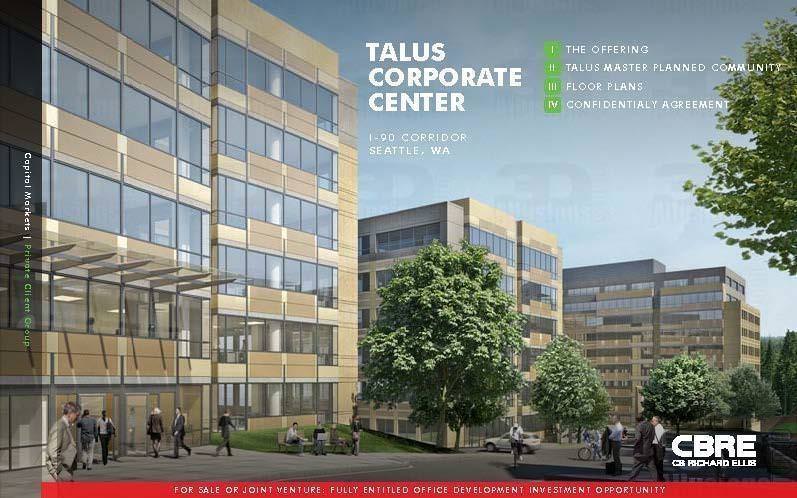
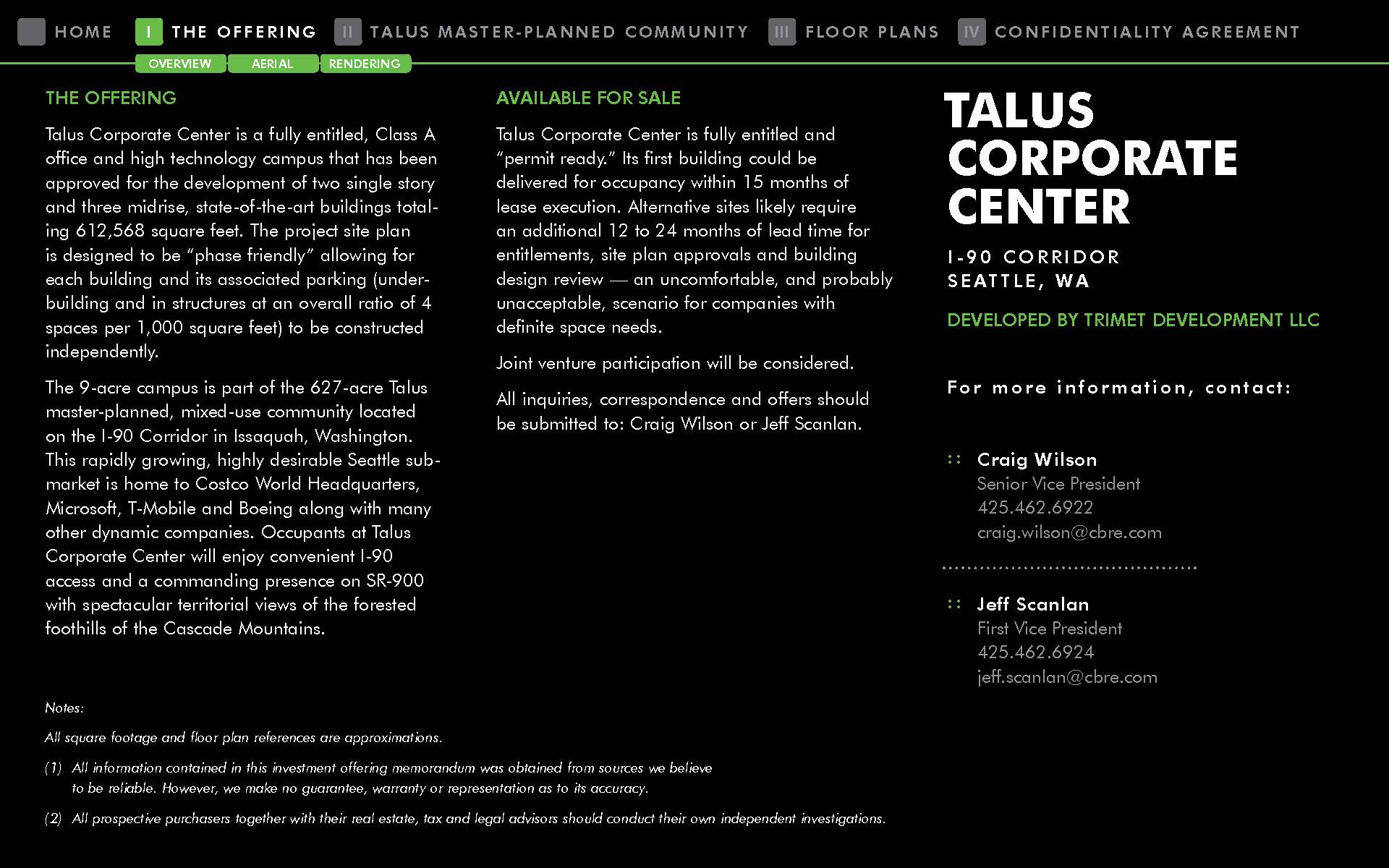
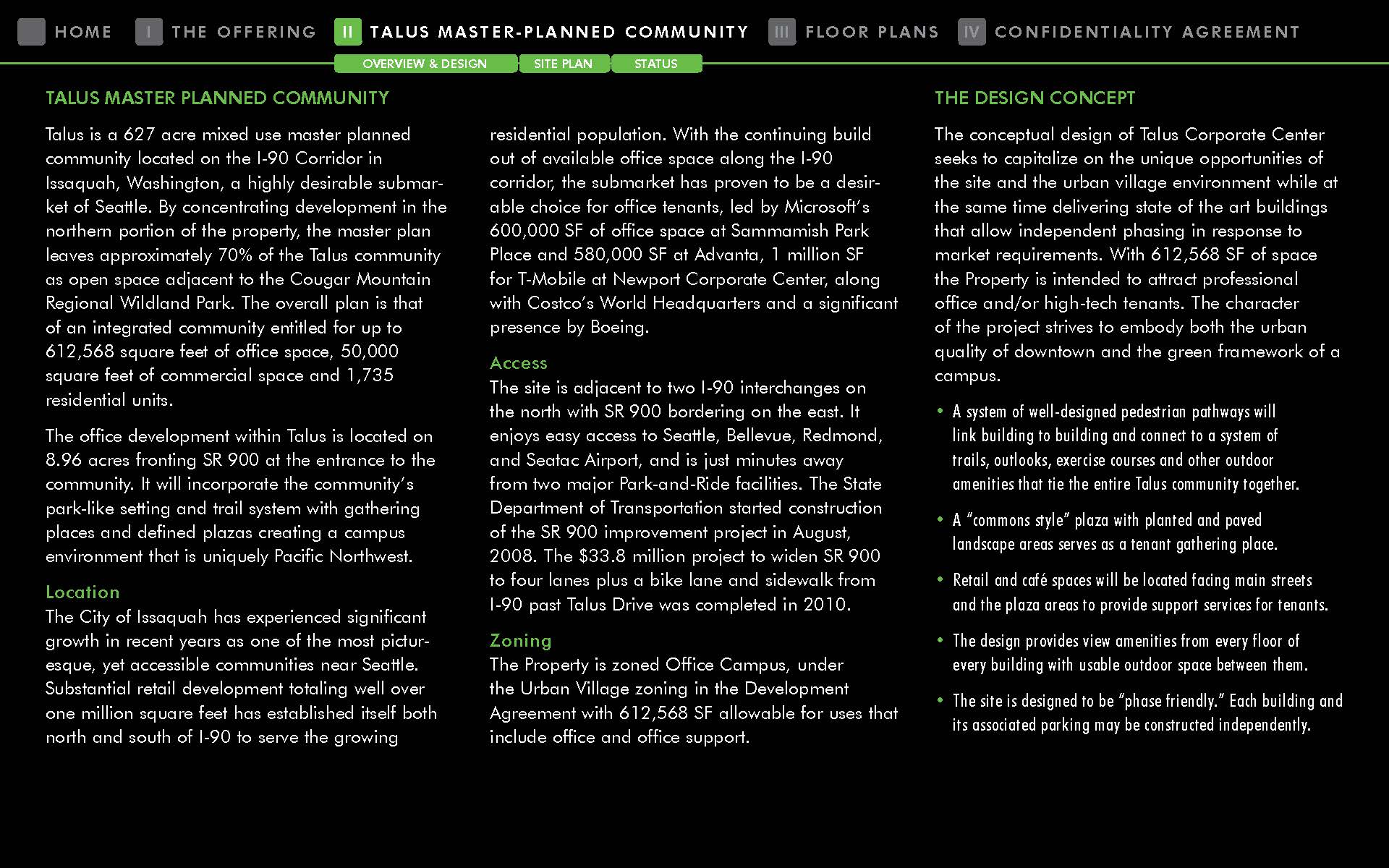
Talus Corporate Center is a fully entitled Class A office and high-technology campus located in Issaquah, Washington along the I-90 Corridor. The development is part of the larger 627-acre Talus master-planned community, which includes residential, commercial, and open space components.
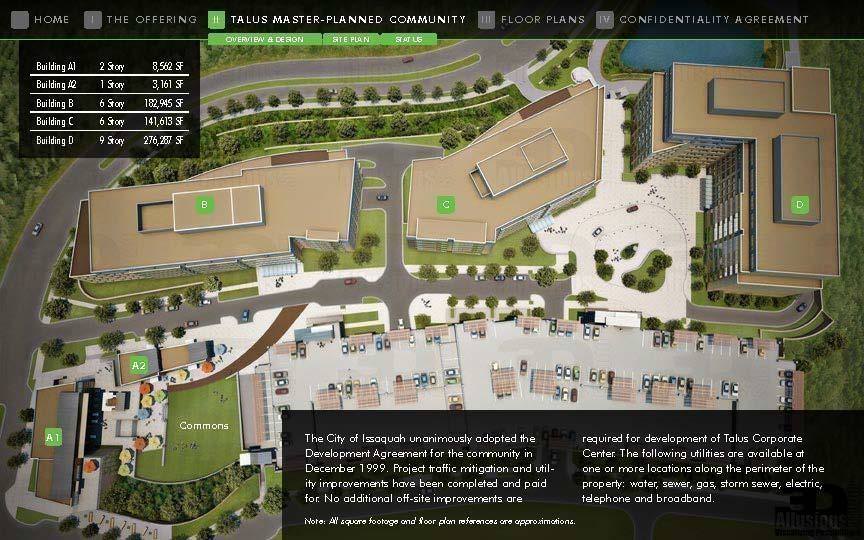
The office campus consists of approximately 612,568 square feet of total office space distributed across five buildings on an approximately 9-acre site.
The building program includes:
- Building A1 — 2-story, approximately 8,562 SF
- Building A2 — 1-story, approximately 3,161 SF
- Building B — 6-story, approximately 182,945 SF
- Building C — 6-story, approximately 141,613 SF
- Building D — 9-story, approximately 276,287 SF
In addition to the office buildings, the development includes support retail and café space, integrated plazas, and a pedestrian-oriented campus environment.
The site is designed with a parking ratio of approximately 4 spaces per 1,000 square feet, utilizing a combination of under-building and structured parking.
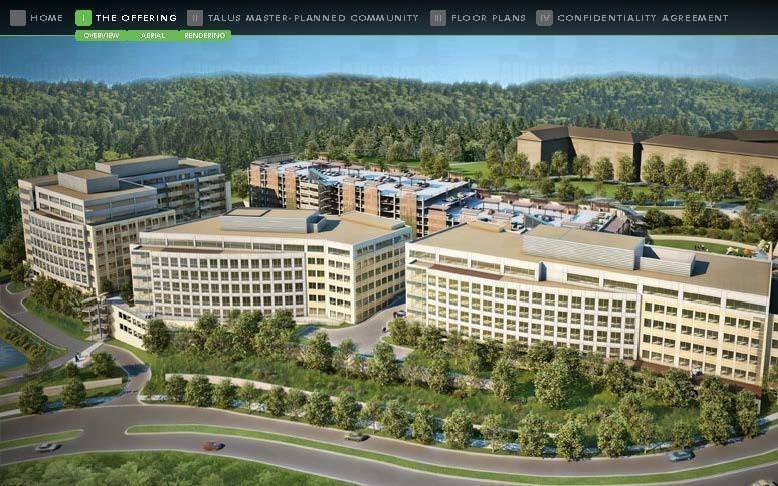
Our role was to create architectural renderings that communicated the scale, phasing, and identity of the project within both the Talus community and the broader I-90 corridor.
The Real Challenge — Communicating Scale and Phasing Simultaneously
This was not a single-building project. It was a multi-phase office campus designed to be developed over time. The challenge was to clearly communicate the full build-out of the campus, how individual buildings relate to one another, and how the project functions at each stage of development.
Each building could be constructed independently, so the visualization needed to work both as a complete vision and as a series of incremental phases.
Visualization Strategy — Campus Before Buildings
The approach focused on presenting the project as a cohesive campus rather than a collection of office buildings. This included:
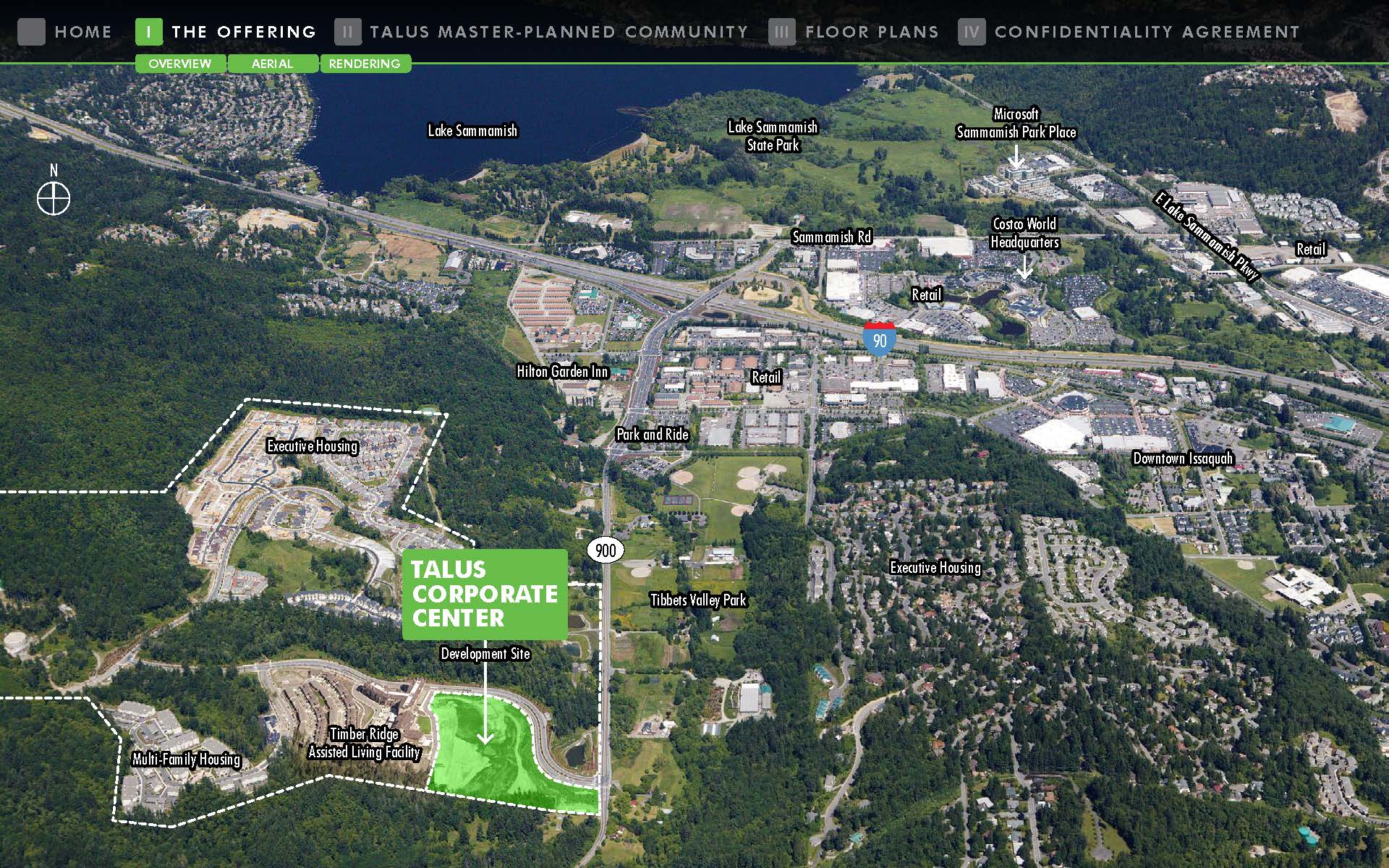
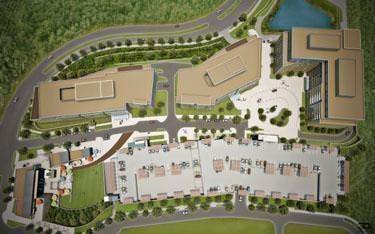
- Aerial perspectives showing full site organization
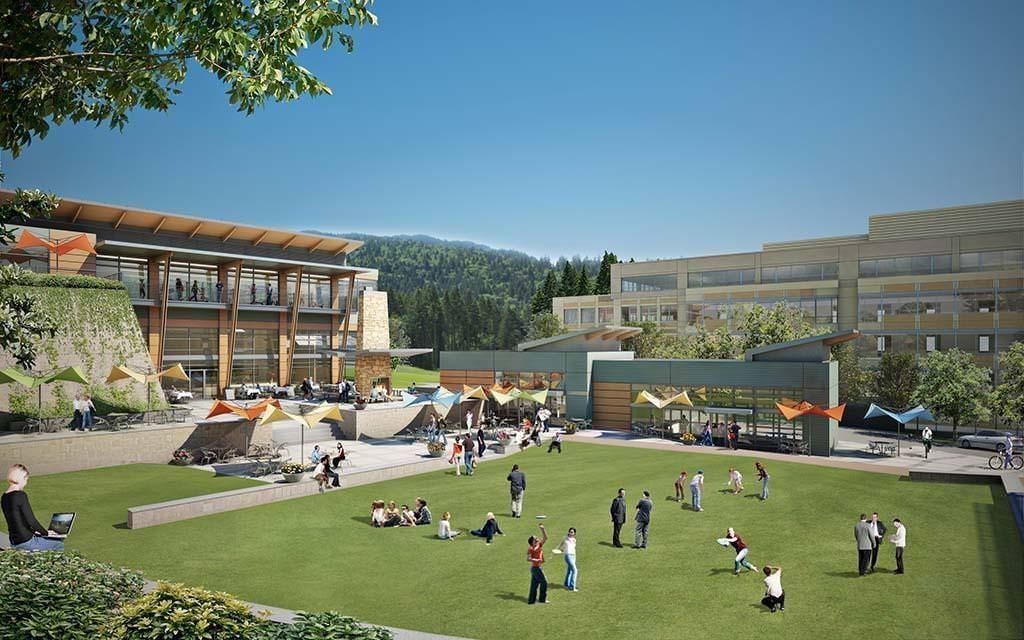
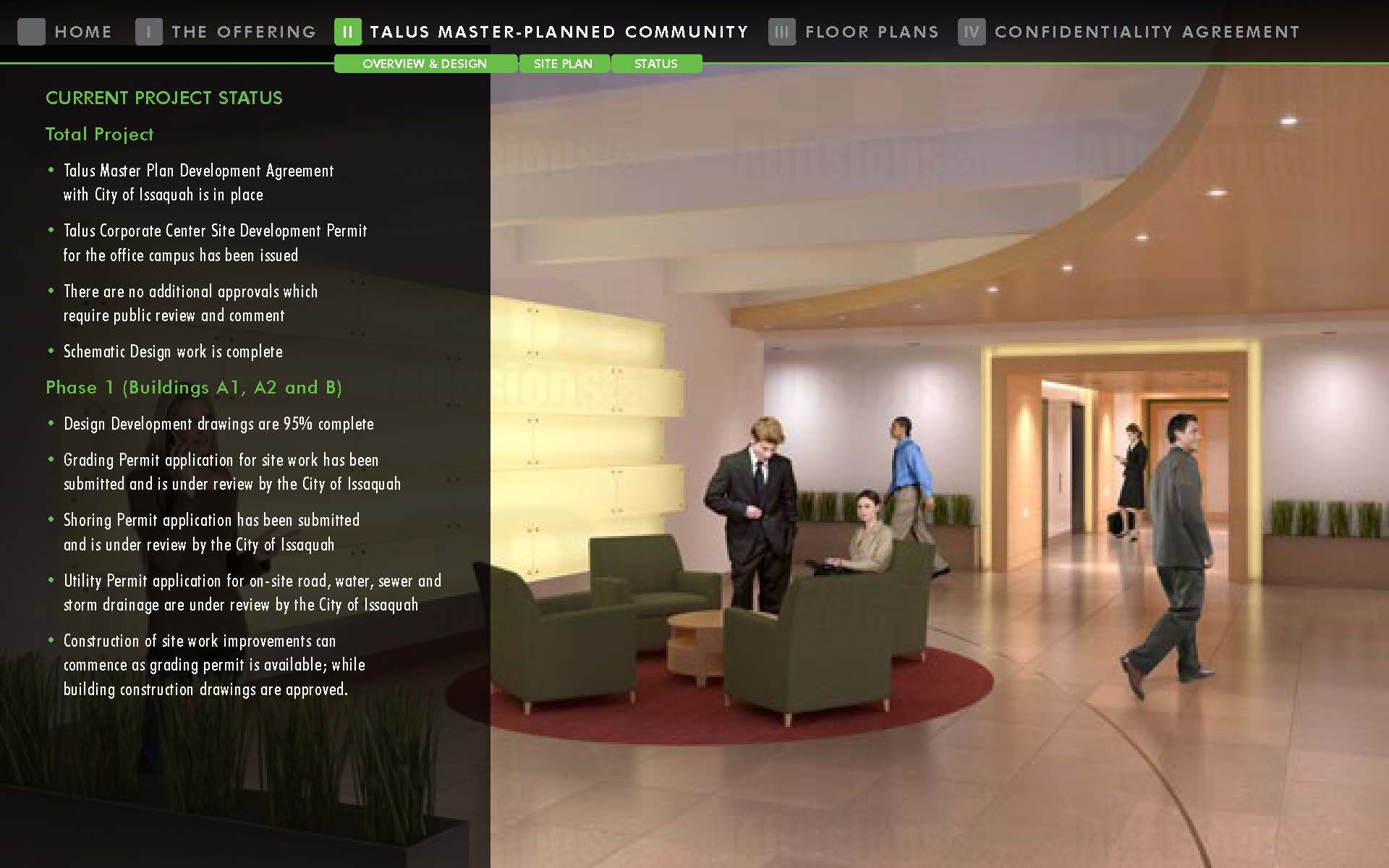
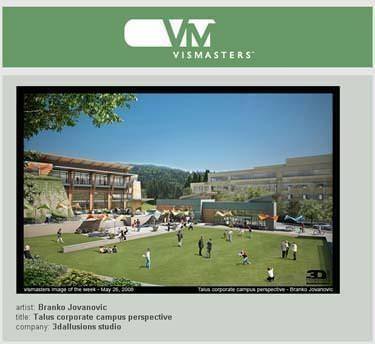
- Ground-level views emphasizing pedestrian movement and gathering areas
- Relationships between buildings, plazas, and circulation paths
- Integration with surrounding natural landscape and terrain
This allowed viewers to understand both the macro scale and the human-scale experience.
Site and Community Integration — Building Within a Larger System
Talus is part of a larger master-planned community that includes:
- Up to approximately 1,700+ residential units
- Approximately 50,000 square feet of supporting commercial space
- Significant preserved open space, with roughly 70% of the overall community maintained as natural landscape
The visualization reinforces this relationship by showing connections to trails, open space, and surrounding residential areas. The office campus is positioned as part of a broader live-work environment rather than a standalone development.
Design Intent — Urban Structure Meets Natural Environment
The conceptual design blends two key ideas:
- The organization and density of an urban office environment
- The openness and natural character of the Pacific Northwest
The renderings communicate this balance through structured building placement, defined plazas, pedestrian pathways, and views oriented toward forested hills and surrounding landscape.
Operational Clarity — What the Project Actually Delivers
Beyond visual appeal, the renderings clearly communicate the functional aspects of the development:
- Over 600,000 square feet of Class A office space
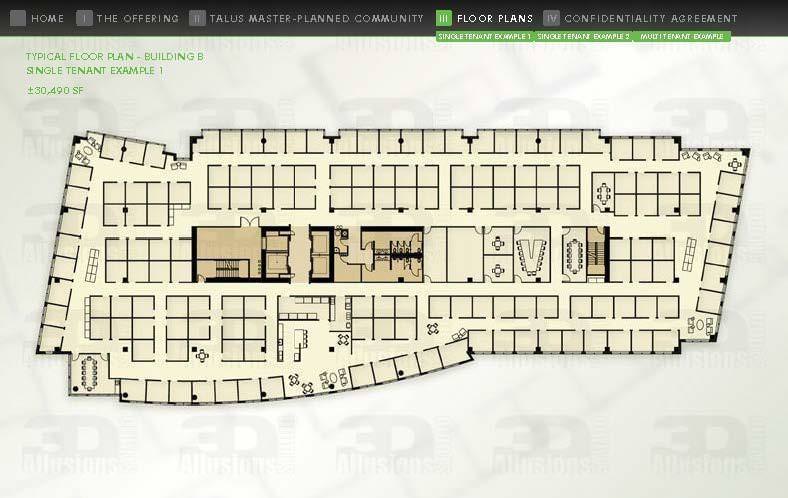
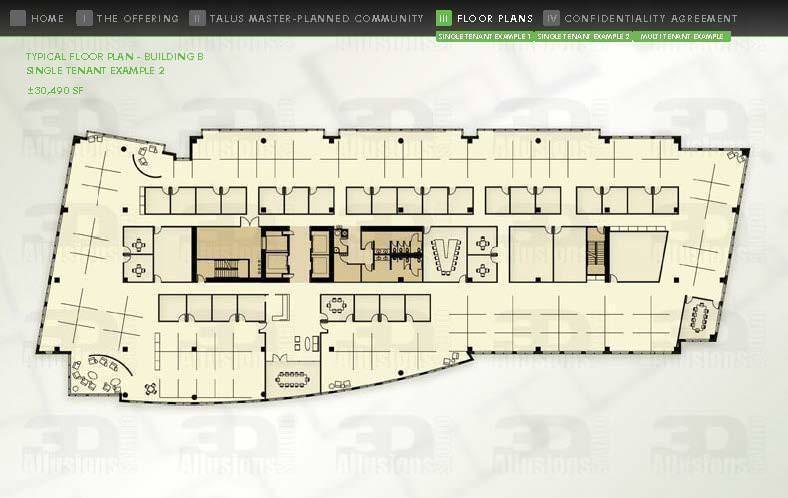
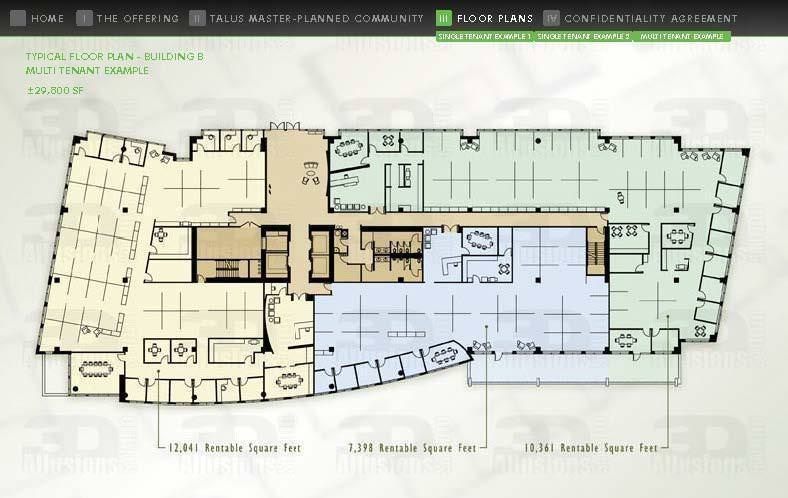
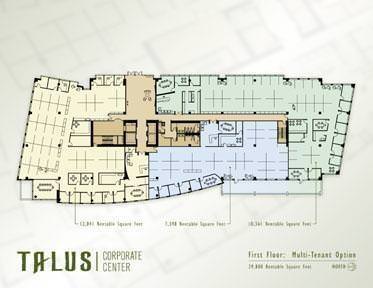
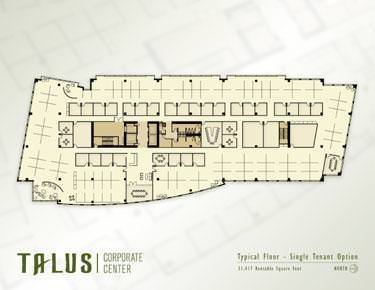
- Multiple building configurations supporting single or multi-tenant occupancy
- Typical floor plates of approximately 30,000 square feet in larger buildings
- Phased development capability with independent building delivery
- Fully entitled and infrastructure-ready site
This level of specificity is critical for developers and tenants evaluating the project.
Speed to Market — A Key Development Advantage
One of the defining aspects of this project is that it is fully entitled and permit-ready. Compared to competing sites that require extended entitlement timelines, Talus Corporate Center offers the ability to move forward more quickly.
The visualization supports this by presenting a project that feels resolved, coordinated, and ready for development.
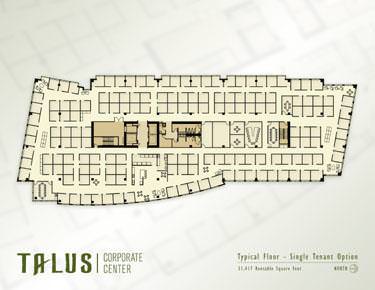
Colored floor plans were created for the use of lease negotiations and enticing potential tenants into commiting to spaces. Colored floor plans can also reflect BOMA calculations and Lease Plans, we can provide a full range of services to help you fill up your project prior to construction completion.
What This Allowed the Client to Do
The renderings provided a clear and detailed representation of the project that supported both marketing and investment positioning. They allowed stakeholders to understand the scale, organization, and long-term vision of the campus.
This supported:
- Investor and tenant communication
- Alignment around phased development strategy
- Marketing of a large-scale campus environment
- Clear presentation of both design and functionality
Positioning — Competing in the I-90 Corridor
The I-90 corridor is one of the most competitive office submarkets in the region, with strong demand from technology and corporate users.
Talus Corporate Center is positioned to compete by offering:
- A multi-building campus environment
- Proximity to major employment centers
- Integration with a master-planned community
- A fully entitled, development-ready site
The visualization reinforces this positioning by clearly communicating both scale and quality.
Where This Fits Today
Office development continues to evolve toward environments that balance density, flexibility, and quality of experience. Campus-style developments like Talus remain relevant because they offer a combination of accessibility, identity, and livability.
Visualization plays a key role by helping stakeholders understand both measurable scope and experiential qualities before construction begins.
What This Project Shows
This case demonstrates that effective architectural visualization must combine specificity with clarity. Large-scale developments require more than attractive imagery. They require clear communication of program, scale, phasing, and context.
By integrating detailed project information with experience-driven imagery, the visualization becomes a tool for decision-making, not just presentation.
It allows stakeholders to understand not just what is being built, but how it will function and grow over time.