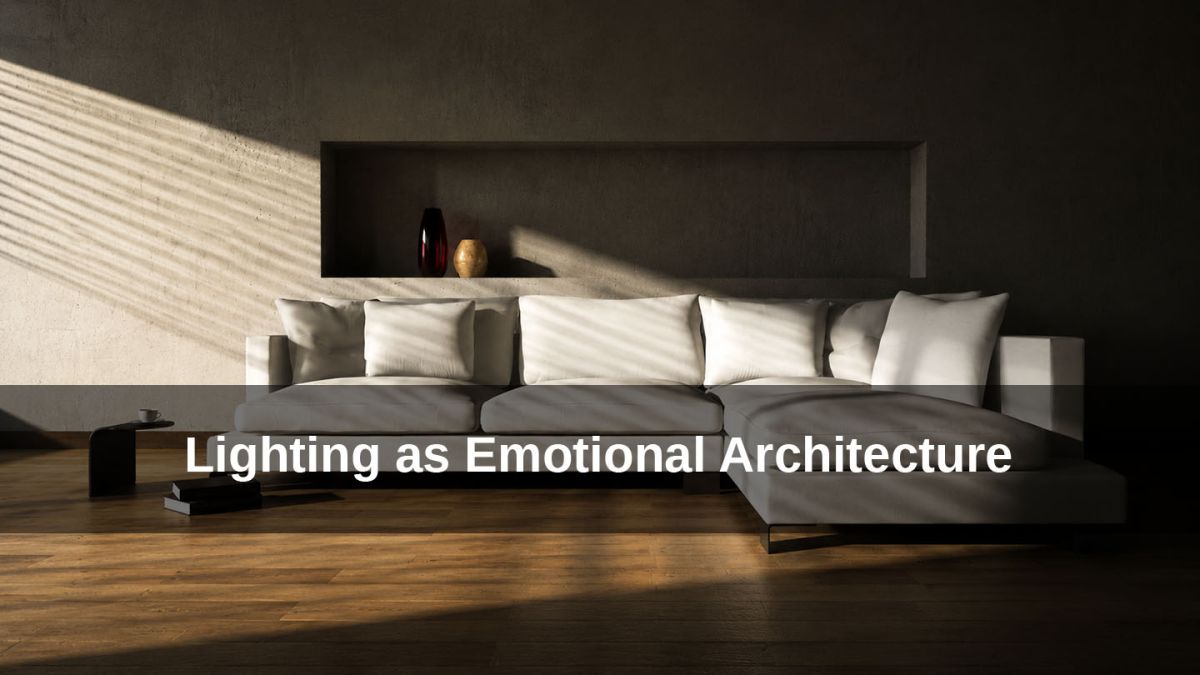
Lighting as Emotional Architecture
How Light Shapes Atmosphere, Memory, and Human Experience in Architectural Visualization
At 3DAStudio™, one of the central principles behind what we call Cinematic ArchViz™ is the belief that lighting is not simply a technical necessity used to illuminate architecture. Light is one of the primary ways people emotionally experience space.
Long before someone notices a floorplan, material palette, or architectural detail, they often respond emotionally to the lighting.
Light shapes mood.
Light shapes memory.
Light shapes atmosphere.
Light shapes emotional comfort.
Light shapes tension and calmness.
Light shapes how architecture feels.
This is one reason some architectural images remain emotionally memorable while others, despite technical quality, feel visually flat or emotionally sterile.
Lighting is not just visibility.
Lighting is emotional architecture.
The strongest architectural visualization often treats lighting not as a rendering requirement, but as a storytelling tool capable of shaping emotional experience in much the same way cinematographers use light in film.
This philosophy is deeply connected to Cinematic ArchViz™, where atmosphere and emotional immersion are considered just as important as technical accuracy.
Human Emotion Is Deeply Connected to Light
Human beings are psychologically affected by lighting conditions whether consciously aware of it or not.
Different lighting environments naturally influence:
- mood
- comfort
- tension
- focus
- perception of safety
- intimacy
- scale
- warmth
- calmness
This is why architecture itself has historically relied heavily on light as part of the emotional experience of space.
Examples include:
- Gothic cathedrals emphasizing spiritual light
- Japanese architecture using shadow and indirect illumination
- Scandinavian interiors embracing soft daylight
- Roman architecture choreographing sunlight through structure
- modernist architecture framing natural light as spatial composition
Architecture and lighting have always been emotionally linked.
Architectural visualization should recognize this relationship.
Many Renderings Prioritize Visibility Over Emotion
One of the biggest weaknesses in many architectural renderings is the desire to make everything perfectly visible.
The result is often:
- evenly illuminated spaces
- flat lighting
- minimal contrast
- no emotional hierarchy
- no shadow tension
- no focal emphasis
Technically, the image may communicate information clearly.
Emotionally, it often feels lifeless.
Cinema rarely lights environments this way.
Cinematographers intentionally shape lighting to:
- guide the eye
- create mood
- establish emotional focus
- conceal and reveal information
- shape psychological tone
Architectural visualization becomes much stronger when it adopts similar thinking.
Natural Light Creates Emotional Authenticity
One reason natural daylight often feels emotionally powerful is because people instinctively recognize its behavior.
Natural light contains:
- softness
- variation
- movement
- diffusion
- environmental interaction
- changing intensity
- tonal complexity
Artificial-looking rendering often occurs when light feels too mathematically perfect.
Real daylight rarely behaves perfectly.
Clouds shift.
Reflections change.
Atmosphere softens contrast.
Interior bounce light varies.
Weather influences intensity.
These natural irregularities help environments feel believable.
Overcast Light Often Feels More Cinematic
Bright sunny lighting has historically dominated architectural visualization because it clearly displays buildings.
However, emotionally compelling imagery often relies on softer and more atmospheric conditions.
Overcast lighting creates:
- restrained contrast
- soft shadow transitions
- realistic tonal balance
- environmental calmness
- atmospheric realism
This is one reason many cinematic architectural images favor:
- cloud cover
- filtered daylight
- diffused skies
- atmospheric softness
Overcast lighting often feels more emotionally authentic because it resembles the lighting conditions people frequently experience in real life.
Darkness Is Important
One of the defining characteristics separating cinematic imagery from many traditional renderings is the willingness to allow darkness to exist.
Many renderings attempt to illuminate every surface evenly.
Real environments rarely behave this way.
Cinema frequently uses darkness to create:
- mood
- mystery
- intimacy
- focus
- emotional depth
- visual hierarchy
Not every part of an image needs equal visibility.
Shadow creates emotional structure.
In many cases, what remains partially hidden becomes just as important as what is revealed.
Contrast Creates Emotional Tension
Light becomes emotionally powerful through contrast.
Examples include:
- warm interiors against cold rain
- sunlight emerging through fog
- illuminated windows within darkness
- soft indirect light against deep shadow
- glowing architecture within storm conditions
Without contrast, lighting often feels emotionally flat.
Contrast creates:
- tension
- focus
- atmosphere
- emotional rhythm
This is one reason cinematic imagery frequently feels more immersive than evenly lit presentation rendering.
Practical Lighting Adds Believability
Practical lighting refers to visible light sources existing naturally within the environment.
Examples include:
- lamps
- sconces
- pendant lights
- streetlights
- signage
- candles
- interior fixtures
Practical lights help create realism because viewers understand where the illumination originates.
They also create:
- visual layering
- emotional warmth
- environmental intimacy
- cinematic atmosphere
Many cinematic architectural images rely heavily on practical lighting to create believable nighttime and interior environments.
Warm and Cool Light Relationships Matter
One of the strongest cinematic lighting techniques involves balancing warm and cool color temperatures.
Examples include:
- warm interiors against cool exterior rain
- cool twilight balanced with interior glow
- warm sunlight against cooler shadows
- neutral architecture contrasted with warm practical lighting
These relationships create:
- emotional richness
- tonal complexity
- atmospheric realism
- visual contrast
Overly uniform color temperature often weakens emotional depth.
Real environments usually contain multiple lighting temperatures interacting simultaneously.
Light Should Guide the Eye
Lighting is one of the most powerful tools for controlling visual hierarchy.
The viewer naturally looks toward:
- brighter areas
- contrast edges
- illuminated focal points
- highlighted surfaces
Strong architectural visualization uses lighting intentionally to guide emotional focus through the image.
Without hierarchy, viewers may feel visually disconnected or overwhelmed.
The image should lead the eye naturally.
Volumetric Light Adds Spatial Presence
Atmospheric lighting becomes particularly cinematic when light visibly interacts with the environment.
Examples include:
- sunlight through haze
- fog diffusion
- dust illuminated in interior space
- moisture scattering light
- volumetric shafts through openings
These effects help viewers feel the presence of air and atmosphere within the environment.
The architecture begins feeling physically inhabitable rather than digitally assembled.
Interior Lighting Is About Emotion, Not Brightness
One common mistake in visualization is over-lighting interiors.
Real interior spaces often contain:
- darker corners
- uneven illumination
- localized warmth
- subtle gradients
- restrained brightness
Excessively bright interiors often feel artificial because they remove mood and atmospheric depth.
Cinematic interiors frequently rely on selective illumination rather than total visibility.
The environment feels more believable because the lighting resembles actual lived experience.
Lighting Changes Perception of Materials
Materials behave differently under different lighting conditions.
The same material may appear:
- warm
- cold
- soft
- harsh
- luxurious
- industrial
- inviting
- sterile
depending entirely on lighting.
Many architectural images fail because materials are evaluated in isolation rather than as part of a lighting environment.
Lighting and materiality are inseparable.
Time of Day Is Emotional Language
Different times of day communicate entirely different emotional experiences.
Morning light may feel:
- hopeful
- calm
- fresh
- optimistic
Afternoon light may feel:
- grounded
- productive
- realistic
Dusk may feel:
- emotional
- cinematic
- luxurious
- intimate
Night may feel:
- mysterious
- isolated
- dramatic
- contemplative
The same architecture can communicate completely different emotions depending on lighting conditions alone.
Lighting Helps Define Spatial Journey
Architecture is experienced sequentially through movement.
Lighting often reinforces this progression by:
- revealing destinations
- emphasizing thresholds
- guiding circulation
- creating focal moments
- controlling emotional pacing
Historically, architecture frequently used light intentionally as part of spatial choreography.
Architectural visualization becomes more immersive when lighting supports that same experiential journey.
Softness Often Feels More Real
One of the biggest mistakes in rendering is excessive contrast and razor-sharp lighting transitions.
Real light often behaves softly due to:
- atmospheric diffusion
- reflected bounce light
- humidity
- surface variation
- environmental interaction
Softness frequently feels more emotionally believable than hyper-defined contrast.
Subtle tonal transitions often create stronger realism.
Lighting and Cinematic ArchViz™
At 3DAStudio™, we believe lighting is one of the most important elements separating technical rendering from emotionally immersive architectural imagery.
This philosophy is central to Cinematic ArchViz™.
The goal is not simply to illuminate architecture clearly. The goal is to shape emotional atmosphere, environmental realism, spatial depth, and human experience through light itself.
Through restrained contrast, atmospheric interaction, practical lighting, tonal variation, shadow, softness, and emotional composition, architectural visualization becomes more than documentation.
It becomes mood.
And often, mood is what people remember most.
Related Articles in This Series
Architectural visualization is more than creating realistic images. It is about shaping perception, guiding emotion, and telling stories through the built environment. Explore the complete Cinematic ArchViz™ article series:
- What Makes an Architectural Image Feel Cinematic?
- Telling a Story Through Design
- Environmental Storytelling Through Imperfection
- Cinematic ArchViz™ as Sequential Art
- Atmospheric Realism
- Lighting as Emotional Architecture
- Lens Language in Architectural Visualization
- Architecture First, Storytelling Second
Together, these articles explore the principles behind Cinematic ArchViz™—an approach to architectural visualization that emphasizes storytelling, atmosphere, emotion, composition, and the human experience of architecture.
CAHDD Transparency — How The Header Image Was Created
Most of our work is CAHDD Stage 0 or Stage 1. That means it is either fully human-created or built using standard digital tools with complete human control. That is still the foundation of how we work.
For article header images, we push into CAHDD Stage 3 or 4. These images are either AI alterations to our work or AI created and refined by us, this does not represent our normal workflow. Because of that, we are calling it what it is.
This is not a replacement for how we work. It is a controlled use of a tool. We are testing it, understanding it, and being upfront about it.
CAHDD (Computer Aided Human Designed & Developed) is a framework we created to make this kind of transparency simple and visible. It is not about enforcement or gatekeeping. It is about showing where the human hand is and where the machine starts to get involved.
CAHDD Stages as they apply to architectural visualization:
Stage 0 — Fully hand-created work with no digital tools.
Stage 1 — Standard digital workflow. Modeling, rendering, and post-production with full human control.
Stage 2 — Procedural or automated processes that assist, but do not influence creative decisions.
Stage 3 — Human-directed work with AI assisting in refinement such as lighting, resolution, or visual polish.
Stage 4 — AI-generated content with human direction and selection.
Stage 5 — Fully AI-generated work with minimal human input.
Stage X — Mixed or evolving workflows that combine multiple stages.
Full framework and philosophy: CAHDD.org